Mindfulness & Healing

  • How Trauma Lives in the Body: What the Science Is Finally Catching Up To

    If you’ve ever wondered why you know you’re safe but still feel panic in your chest—or why your brain can’t seem to move on, even after all the therapy—you’re not crazy, broken, or behind.

    You’re probably just human.

    And your body remembers what your mind can’t fix.

    Trauma doesn’t live in logic. It lives in tension patterns, breath holds, clenched jaws, gut disruptions, and a nervous system that’s doing its best to protect you, long after the danger has passed.

    Science is finally catching up to what so many of us have felt: trauma is stored in the body. It shapes how we feel, react, relate, and move through the world.


    The Body Keeps Score — and Tries to Protect You

    When something overwhelming happens and we can’t process it at the time, our nervous system steps in. It says: “Let me hold this until you’re ready.”

    That holding can look like:

    • Chronic tightness in the chest or belly
    • Digestive issues with no medical cause
    • Panic or shutdown when nothing’s “wrong”
    • Trouble sleeping or waking up wired

    Your system isn’t malfunctioning. It’s being loyal. It’s stuck in a survival loop because it never got to complete the original one.


    New Science, Same Truth: Trauma is Physical

    2025 studies continue to confirm what many trauma-informed practitioners have known for decades:

    • PTSD and CPTSD show distinct patterns in brain activity and hormone levels
    • The vagus nerve plays a key role in recovery, resilience, and emotional regulation
    • Somatic therapies like EMDR, SE, and neurofeedback improve healing outcomes faster than traditional talk therapy alone

    In plain terms: the more we include the body, the better the healing.

    This doesn’t mean therapy is pointless; it means therapy is incomplete without the body.


    Why You Might Still Feel Stuck (Even After Doing the Work)

    You’ve journaled. You’ve done the breathwork. You’ve sat in silence. You’ve screamed into pillows. And still, your body holds something.

    This is common, especially among those who have undergone extensive inner work.

    Here’s why:

    1. Cognitive awareness doesn’t equal somatic resolution. Knowing why something happened doesn’t mean your body feels safe now.
    2. You might be bypassing your body to “stay on track.” If you learned that being calm = being healed, you may suppress instead of process.
    3. Your system may be protecting you from another collapse. Especially if you were high-functioning during trauma, your body may fear what will surface if it softens.

    None of this means you’re blocked. It means your body is asking for a more honest, slower, attuned approach.


    What Actually Helps the Body Heal

    The tools below aren’t “miracle cures.” They’re practices and therapies that speak the body’s language:

    Somatic Experiencing (SE)

    Gently guides you back into sensation without reactivating trauma. Helps your system complete stuck responses.

    EMDR

    Uses eye movement to help reprocess distressing memories. Especially useful for trauma that won’t release mentally.

    Vagal Toning

    Singing, humming, cold exposure, breath tracking, and simple things that help the nervous system return to regulation.

    TRE (Trauma Release Exercises)

    Uses tremor-based movement to release built-up stress from the fascia and muscles.

    Nature, Movement, and Safety Cues

    Being outdoors, swaying, walking with presence, and having supportive eye contact all reinforce to the body: “We’re safe now.”


    Energy Work That Actually Respects the Body

    There’s a version of energy work that isn’t airy, bypassing, or disconnected from the body. It’s rooted. It’s ancient. And it still works.

    Acupuncture & Chinese Medicine

    These systems understand the body as an energetic and physical ecosystem. They don’t force healing; they support balance. Acupuncture can calm the nervous system, support the release of trauma, and restore organ-level regulation in ways that Western science still struggles to fully comprehend.

    Herbal Medicine

    Chinese herbs and functional plant formulas can support what your nervous system is trying to do: stabilize, ground, and replenish. Especially when paired with somatic work, they offer a layer of support that doesn’t override it, but fortifies.

    If you’ve felt let down by modern medicine, this is often a powerful bridge: gentle, non-performative, and deeply regulating.


    The Bottom Line

    Trauma recovery isn’t about fixing yourself. It’s about letting your body know it’s no longer in danger.

    And that takes time, patience, and a return to the body, not just the story.

    You don’t need another program. You need more presence.

    You don’t need to be more healed. You need to be more supported.

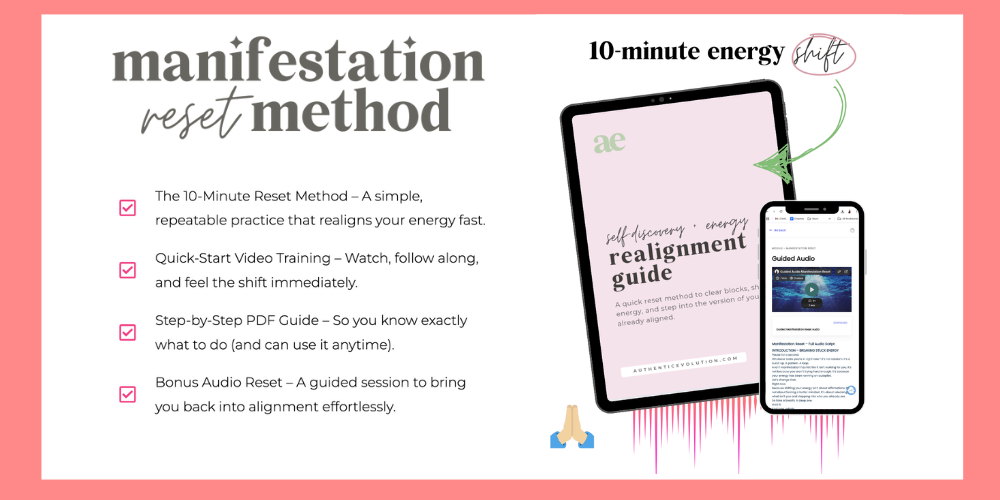
    If you want a gentle starting point, I recommend The Manifestation Reset or The Identity Shift Series within AE. Both were built for nervous system-first humans who are tired of spiritual bypassing and self-help burnout.

    You’re not behind. Your body’s just waiting for the safety it never had.
  • When Nothing Works: Finding Your Way Through the Stuckness of Healing

    You’ve tried everything. The therapy. The retreats. The breathwork. The books. And yet, the anxiety still spikes. The shutdown still sneaks in. The old memories still whisper at the worst times.

    That doesn’t mean you’re doing it wrong. It means you need a new way in.

    Most trauma work focuses on managing symptoms or re-telling the story. But some trauma isn’t ready to be told. And some nervous systems are done performing “progress.”

    I remember sitting in a therapist’s office thinking, “Why isn’t this working?” I had done the meditations. I’d journaled. I’d screamed into pillows. I even traveled to a retreat that promised transformation. Still, I came home to the same tension in my chest. The same silent shutdown when I needed to speak up.

    If you feel like nothing works, you’re not alone. The truth is that many healing methods weren’t designed for the complexity of long-held trauma or for the kind of human who has already done so much inner work.

    This guide isn’t about trendy hacks or spiritual bypassing. It’s a grounded walk through the body-based, nervous-system-informed, trauma-attuned methods that actually help when the usual routes don’t.

    Let’s dig into what to explore now when you feel stuck in the “I’ve tried everything” zone.

    1. When Talk Isn’t Enough: Body-First Trauma Approaches

    Somatic Experiencing

    Trauma gets stuck when the body never has a chance to complete the stress response. SE helps you track subtle sensations, slowly releasing tension, and restoring a sense of safety in your own skin.

    This isn’t about reliving trauma. It’s about letting your body finish a sentence it never got to complete.

    If you find yourself:

    • Overwhelmed when trying to describe your story
    • Feeling “out of body” in therapy
    • Tired of talking but still anxious

    …this may be the next step.

    Sensorimotor Psychotherapy

    Where talk therapy meets the body, Sensorimotor brings awareness to posture, tension, and movement that got locked in during trauma. You process through sensation, not just story.

    This approach works well for those who:

    • Experience physical symptoms with no apparent cause
    • Have you tried CBT or talk therapy and hit a wall
    • Want a deeply embodied, present-moment method

    Neurofeedback

    When the brain is dysregulated, neurofeedback helps it regain balance without needing to talk or rehash anything. It works exceptionally well for hypervigilance, sleep issues, and emotional reactivity.

    Unlike traditional therapy, you don’t need to speak. The tech tracks your brainwaves and helps your system practice new regulation patterns.

    EMDR

    Instead of talking about trauma, EMDR helps you reprocess it. Through bilateral stimulation (such as eye movements), the brain files memories in a less emotionally intense manner. Fast-tracked relief for stored pain.

    EMDR is especially powerful for:

    • Flashbacks
    • Nightmares
    • Unshakable shame

    2. When Your Parts Are Fighting: Internal Family Systems

    IFS isn’t about fixing you. It’s about listening to the parts of you that had to protect you, distract you, or carry pain. You learn to relate to them instead of judging them. The goal? Lead from your core Self again, calm, curious, and transparent.

    This approach is beneficial if:

    • You feel like you sabotage your own healing
    • You have inner conflict or shame cycles
    • You’ve done the work but still feel like you’re not “yourself.”

    Clients often say IFS helped them finally feel compassion for the parts of themselves they used to hate.

    3. When Words Fail: Creative and Experiential Therapies

    Art & Music Therapy

    Sometimes, trauma shuts down the language part of the brain. Creative modalities provide an outlet that doesn’t rely on verbal communication. Emotional release, reintegration, and even joy can return here.

    These are especially powerful when:

    • You freeze when asked to talk about trauma
    • You feel emotionally flat or numb
    • Traditional therapy feels rigid or exhausting

    Psychedelic-Assisted Therapy

    Still emerging legally, but it has a deeply impactful effect when done safely and supported. These sessions aren’t about tripping; they’re about accessing what the conscious mind guards too tightly.

    One client said: “It didn’t give me new answers. It helped me trust the ones I already had.”

    4. When You Need Structure and Freedom: Personalized Therapy Plans

    Trauma is not one-size-fits-all. What is the most promising new direction in treatment? Customized pathways.

    Signs this might help:

    • You’ve tried multiple approaches with little lasting change
    • Your symptoms fluctuate a lot over time
    • You need therapy that works with your lifestyle, not against it

    Look for therapists who understand the importance of pacing, informed consent, and co-creation. Ask if they adapt modalities depending on nervous system states, not just diagnostic labels.

    5. When You Want Daily Support: Nervous System Regulation

    You don’t need to be in a session to be healing. You need to learn how to come back to yourself in tiny ways, over and over.

    Try:

    • TRE (trauma release exercises)
    • Vagal toning (humming, singing, cold face rinses)
    • Breath tracking (not controlling, just noticing)
    • Mindful movement (walking, yoga, swaying)

    These don’t replace therapy—they support it.

    They are your self-led scaffolding when the world feels like too much.

    6. When Nature Heals What Rooms Cannot

    Being outdoors is not a luxury; it’s regulation. Nature-based healing is now being studied as a trauma treatment, and for good reason. The body remembers what safety feels like under trees, near water, and in fresh air.

    You don’t need a retreat. Try:

    • Grounding barefoot in the grass
    • Sitting with your back against a tree
    • Hiking with intention, not for fitness but for presence

    When you don’t feel safe in your home or head, nature can become your first nervous system ally.

    7. When the Body Needs Fuel to Heal: Nutritional & Metabolic Support

    Trauma affects:

    • Gut health
    • Sleep cycles
    • Energy regulation
    • Inflammation

    Supporting your system through:

    • Anti-inflammatory nutrition
    • Nervous system-friendly supplements (Magnesium, Omega-3s, B-complex)
    • Sleep routines

    You are not too sensitive. You are just unbuffered. Nutrition is part of that buffering.

    Bonus: What if I’m Afraid to Try Again?

    That’s not resistance. That’s protection.

    Your body has tried so many things. It’s bracing for disappointment. That makes sense. You might not need a whole new method; you might need a more attuned delivery. A softer door. A therapist who doesn’t push when you freeze. A practice that doesn’t demand disclosure before safety.

    You’re allowed to be cautious. You’re allowed to not rush back into another thing.

    But you’re also allowed to believe that the next step meets you differently.

    If you’ve tried everything and still feel stuck, it doesn’t mean nothing works.

    It means what works for you may be different.

    There is no “right way” to heal. There is only what helps your system feel safer, slower, and softer until the frozen parts begin to thaw.

    Start here. One step. One breath. One moment of noticing.

    Healing is still possible, especially for you.

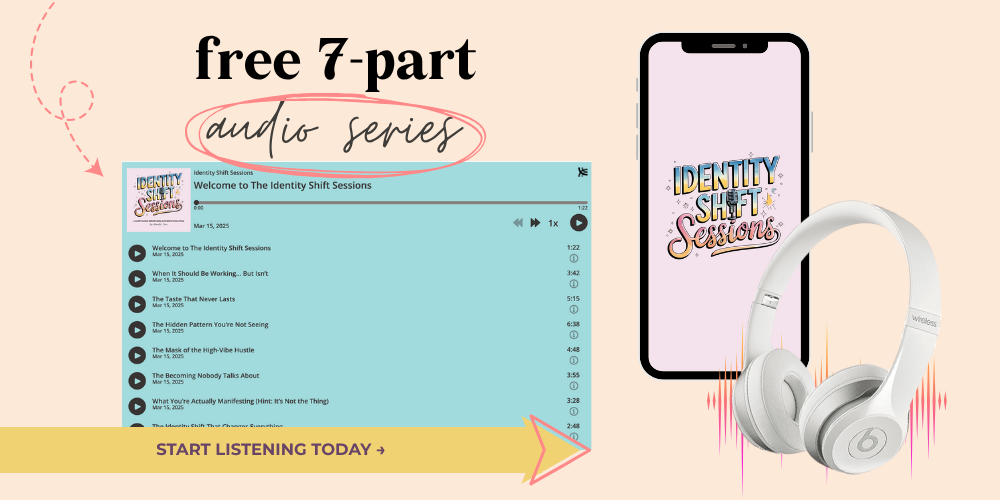
    Want to explore this further? My free audio series, The Identity Shift, dives deeper into what keeps us stuck and what frees us.

  • Why Listening Without Judging May Do More Harm Than Good

    “We listen, and we don’t judge.” On the surface, it sounds ideal, a safe, open space for truth-telling without fear of criticism. But when you peel back the surface, this practice, popularized by a viral TikTok and Instagram trend, often misses something essential: context, accountability, and emotional honesty.

    Because sometimes, withholding judgment doesn’t create safety, it creates suppression.

    In this blog, we’ll unpack the very human nuance that gets lost in these “non-reactive” confession videos, and how you can cultivate honest, connected conversations that don’t bypass your own truth in the process.

    The Allure of Non-Judgmental Listening

    1. The Idealized Safe Space

    These trends tap into our desire to be seen without fear. The idea is that honesty flows when we don’t risk immediate reaction. In harmless contexts, such as confessions about snacks or silly habits, this often fosters closeness and laughter.

    But the problem is assuming all disclosures fit into that same playful space.

    2. It Scratches the Surface of Authenticity

    When life feels overly curated, a moment of unfiltered vulnerability hits all the harder. People crave what feels “raw.” But there’s a difference between authentic connection and reactive exposure.

    Where It Goes Sideways

    1. Some Confessions Deserve a Real Response

    Not everything is a quirky overshare. Some confessions hold weight, betrayals, hidden resentments, and moral missteps. These require follow-up, repair, and sometimes boundaries.

    Nodding in silence may look calm, but it can feel like emotional avoidance when the moment actually calls for truth and clarity.

    2. Silence Isn’t Always Safe

    When someone drops something heavy and you’re expected to stay neutral, your own nervous system often takes the hit. You absorb instead of express.

    Over time, this creates emotional backlog—frustration, disconnection, and confusion about where you stand in the relationship.

    3. Public Vulnerability Distorts Intent

    Confessing something raw to a partner is one thing. Doing it with a camera rolling, while a million strangers comment in real time? That’s no longer a connection, it’s content.

    The desire to “look accepting” online can override your inner truth. You become an actor in a moment that should have been deeply personal.

    How to Create Meaningful, Healing Conversations

    1. Use Boundaries, Not Silence

    Being open doesn’t mean being passive. You can receive someone’s truth and be clear about how it lands.

    Example: “I appreciate your honesty. I need space to sit with what you shared.”

    That’s not judgment. That’s self-respect.

    2. Make Room for the Full Experience

    True connection means there’s space for both people’s emotional reality. You don’t have to react in anger or agreement, but you can express impact.

    Try: “That’s a lot to hear. I want to be honest that it stirred something up for me. Can we talk through this when we both have capacity?”

    3. Not Everything Belongs on Camera

    Let private moments stay sacred. Just because vulnerability is trending doesn’t mean it’s ready for public viewing. Deep truths deserve depth, not a TikTok edit.

    Instead of chasing exposure, ask: “Does this need to be witnessed or processed?”


    The Bigger Truth This Trend Reveals

    We want to be held, seen, and understood.

    But sometimes in our rush to prove how accepting we are, we leave out the very thing that makes us human, our own responses.

    Judgment isn’t inherently bad. When it’s delivered with care, it creates clarity. It invites growth. It offers feedback. It can even deepen love.

    So the next time you’re invited into a vulnerable moment on or off screen, don’t trade your voice for silence.

    Listen fully. Reflect honestly. And honoring that connection isn’t about being unshakable. It’s about being real.

    Need support navigating deeper conversations and emotional regulation? The Identity Shift Series was made for moments like these. Learn how to hold yourself through the hard stuff, without bypassing your truth.

    🎧 [Start Listening Here]

  • How to Use Breathwork Techniques to Reduce Overwhelm and Boost Creativity

    Overwhelm has a way of sneaking in when you least expect it. You’re juggling expectations, holding space for everyone else, and your creative spark quietly fizzles out. You feel foggy, drained, and disconnected from the flow that used to come so easily.

    But here’s what most people miss: creativity isn’t a mindset issue. It’s a nervous system issue. And the fastest way to shift that? Your breath.

    Breathwork is more than a trend. It’s a powerful tool to clear emotional static, reset your energy, and reconnect with the intuitive part of you that knows exactly what to do next. Let’s talk about how to actually use it when you feel overwhelmed or creatively blocked.

    Why Overwhelm and Creativity Don’t Mix

    The Fight-or-Flight Hijack

    When overwhelm hits, your nervous system flips into fight-or-flight. Cortisol floods your system, your breathing shortens, and your body prepares for a threat. That may help you survive a crisis, but it sabotages your ability to create.

    Creativity requires access to your full brain. It needs presence, curiosity, and a sense of internal safety. When your system is stuck in stress, the pathways that lead to creative insight literally shut down.

    The Noise of Mental Clutter

    Overwhelm clutters your inner world. You can’t hear your intuition over the mental noise.

    Breathwork clears that fog. It gives your system something to anchor into—a rhythm, a signal of safety—so your mind can stop spiraling and start focusing.

    The Science Behind It

    Breathwork activates the parasympathetic nervous system (the “rest-and-digest” mode) and quiets the sympathetic system (the “fight-or-flight”). It improves oxygenation, heart rate variability, and neuroplasticity—the stuff your creative self needs to thrive.

    Studies show intentional breathing can:

    • Improve focus and cognitive performance
    • Reduce anxiety and emotional reactivity
    • Increase access to the brain’s default mode network (linked to imagination and daydreaming)

    Breathwork for Overwhelm

    Box Breathing (aka 4×4)

    Inhale 4 counts. Hold 4. Exhale 4. Hold 4. Repeat 4 rounds.

    This technique is a nervous system reset. Use it when you’re spiraling or feel like you can’t think straight.

    4-7-8 Breath

    Inhale 4. Hold 7. Exhale 8. Repeat for 3–5 rounds.

    This is your emergency brake. It instantly downregulates stress and invites the body into calm.

    Diaphragmatic Breathing

    Place a hand on your belly and one on your chest. Breathe slowly into your lower hand. Exhale fully. Repeat for 3–5 minutes.

    This is your daily baseline reset. Do it while journaling, walking, or winding down for bed.

    Breathwork for Creativity

    Breath of Joy

    A three-part breath paired with arm movements to energize the body.

    This is your go-to when you feel stuck and stagnant. It wakes up your energy and shakes off mental blocks.

    Resonant Breathing (aka Coherent Breathing)

    Inhale 5–6 counts. Exhale 5–6 counts. Repeat for 5–10 minutes.

    This smooth, rhythmic breath balances the nervous system and enhances access to the flow state.

    Kapalabhati (Skull-Shining Breath)

    Short, sharp exhale through the nose while the belly contracts. Do 30 rounds, rest, and repeat if desired.

    This breath increases oxygen, stimulates alertness, and clears mental fog.

    How to Integrate It

    1. Start Your Day Grounded: Use diaphragmatic breathing or resonant breath to start the morning in clarity.
    2. Use It Between Tasks: Feeling scattered? Pause and do a round of box breathing before your next meeting or creative block.
    3. Create a Pre-Work Ritual: Anchor into presence with Breath of Joy before writing, designing, or brainstorming.
    4. Bookend Your Day: Use 4-7-8 or diaphragmatic breath to decompress and regulate before bed.

    Personal Moment

    When I was creating my first course, I hit a stretch where nothing would come. My mind was racing with deadlines, and I started to question everything. One afternoon, I sat on my floor and did 4-7-8 breathing for five minutes. I felt my jaw unclench. My thoughts slowed. Within the hour, I had mapped out three modules.

    It wasn’t that I didn’t know what to say. My nervous system just wasn’t in a state to let it come through.

    Breath is the Gateway

    You don’t need more time. You don’t need a perfect plan.

    You need to feel safe in your body. You need a clear channel to receive. You need breath.

    Your creativity is already there. Let it come through.

    Need help regulating through change and creating from alignment?

    Listen to The Identity Shift Series—a 7-part audio experience that walks you through becoming the version of you who no longer chases clarity or confidence. You are the shift.

    📍 [Start the Series Here]

  • How Law of Attraction Can Be Harmful: Shedding Light on Toxicity

    At first glance, the Law of Attraction feels like a revelation.

    Your thoughts create your reality.
    Your energy shapes your experience.
    You hold the power to change your life.

    That sounds empowering, because in many ways, it is.

    But under the surface of all the vision boards and daily affirmations, there’s a deeper conversation most people aren’t having. One that needs to be had.

    Because of the way Law of Attraction (LOA) is packaged and sold online today? It often does more harm than good.

    Not because manifestation itself is flawed. But because the way it’s taught has become distorted, simplified, and in many cases, weaponized.

    Let’s talk about what happens when a tool for personal growth becomes a script for shame.

    The Allure of LOA, And Why It Can Feel So Powerful

    The original intention of LOA is grounded in truth: your mindset, emotions, and focus influence what you experience.

    This isn’t just spiritual talk. Your perception does shape your behavior. Your nervous system filters reality based on safety. Your energy really does shift how others respond to you.

    So yes—there’s power in learning to direct your thoughts, clean up your energy, and co-create with something greater.

    But there’s a catch.

    Because the second you start thinking you’re the sole reason everything in your life is happening, that power becomes pressure.

    Where It Starts to Go Off Track

    1. The Oversimplification of Complex Realities

    LOA, as it’s often taught, skips over the very real layers of life—trauma, inequality, generational cycles, mental health, and grief.

    You’ll hear things like:

    • “You attracted this.”
    • “Everything in your life is a reflection of your vibration.”
    • “If you’re not manifesting it, you must not believe you’re worthy.”

    And suddenly, a teaching that was meant to help you reclaim your power… becomes the very thing making you question your worth.

    Let’s be clear: your mindset matters. But it’s not the whole story.

    You are not responsible for everything that’s happened to you. Especially not things rooted in harm, injustice, or trauma.

    You are, however, responsible for how you heal, how you grow, and how you show up going forward.

    That’s not to blame. That’s power with compassion.

    2. The Trap of Toxic Positivity

    LOA often teaches that negative emotions lower your vibration and block your manifestations.

    So what do people do?

    They fake gratitude.
    They stuff down sadness.
    They try to smile through deep grief and call it alignment.

    But emotions aren’t blocks, they’re messengers.
    And when you suppress them, you don’t become magnetic. You become disconnected.

    You don’t need to be happy all the time to manifest.
    You need to be honest. Present. Resourced.

    True alignment isn’t pretending everything’s fine. It’s about learning how to meet yourself where you are and hold your vision, regardless.

    3. Victim-Blaming Dressed in Spiritual Language

    This one is subtle but deeply harmful.

    When someone loses their job, faces illness, or goes through heartbreak, LOA culture can make them feel like they caused it through bad thoughts or low energy.

    This isn’t just inaccurate, it’s cruel.

    Life is nuanced. Sometimes things happen that aren’t your fault.
    Your pain is not a punishment.
    Your challenges aren’t always manifestations.
    Sometimes, they’re just… life.

    You’re allowed to feel disappointed, angry, or confused. That doesn’t make you “low vibe.” It makes you human.

    4. Using LOA to Spiritually Bypass Responsibility

    Ironically, while some blame themselves for everything, others use LOA to escape accountability.

    You might hear things like:

    • “If they’re triggered, that’s their projection.”
    • “I’m too aligned to be responsible for how my actions affect others.”
    • “I only focus on my vibration, not other people’s problems.”

    But manifestation doesn’t mean abandoning empathy.
    It doesn’t mean bypassing reality.

    It means being present with your truth while still showing up with integrity in the world.

    Real growth includes nuance. Real alignment includes care.

    So… Can You Still Use LOA Without Falling Into These Traps?

    Absolutely. But it requires intention. And a whole lot of self-honesty.

    Here’s how to engage with manifestation in a way that actually supports your well-being:

    What Actually Works: Grounded, Compassionate Manifestation

    1. Process Your Emotions Don’t Bypass Them

    Instead of skipping over your feelings, learn to meet them. Write about them. Breathe through them. Let them move.

    You don’t manifest less by being sad. You manifest less when you disconnect from yourself.

    2. Drop the Blame, Pick Up Responsibility

    There’s a difference between blame and ownership.

    You are not to blame for your trauma, your upbringing, or the things others did.
    But you are responsible for how you move forward. That’s where your power lives.

    3. Redefine Success

    Instead of chasing outcomes, tune into alignment.

    Ask yourself:

    • Does this feel honest?
    • Am I growing from this?
    • Is this in integrity with who I want to become?

    That’s a better compass than vision boards ever could be.

    4. Acknowledge the System You’re In

    We don’t all start from the same place. And we don’t all have access to the same tools.

    LOA that ignores systemic realities becomes a form of spiritual elitism.
    LOA that honors context becomes a bridge to true change.

    5. Tune Back Into Your Own Compass

    You don’t need a coach selling you a $5K method.
    You don’t need to hit some arbitrary milestone to prove you’re “aligned.”

    Your energy is valid now.
    Your truth is valuable now.
    And your pace is perfect for you.

    You’re Not Broken. You’re Just Becoming.

    If manifestation has felt like pressure lately—if you’ve blamed yourself, doubted your worth, or tried to force positivity—this is your reminder to come home to yourself.

    You don’t need to be perfect.
    You don’t need to think happy thoughts all the time.
    You just need to be present enough to feel, real enough to shift, and resourced enough to move forward.

    That’s alignment.
    That’s co-creation.
    That’s manifestation that actually honors who you are.

    Want a more grounded way to explore manifestation, identity, and energy?

    📍 Start with The Identity Shift Series, a 7-part audio journey to recalibrate your nervous system and become the version of you who can receive what you’ve been calling in.

    [Get the Identity Shift Series now]

    This is the work that sticks. Let’s build it on truth.

  • Inner Child Healing: How Dressing Up Can Reconnect You with Real Joy

    When was the last time you wore something just because it made you feel happy?

    Not because it made sense. Not because it was “grown-up” or flattering. But because it sparked something real inside of you, something playful, wild, or strangely comforting.

    Most of us lose touch with that part of ourselves. We learn to dress for roles, expectations, and practicality. But underneath all that is the version of you who didn’t care if her socks matched or if her glitter skirt was “too much.” She just wore what felt good. What made her feel alive?

    And that’s where healing starts.

    Why Your Inner Child Still Matters

    The inner child isn’t a metaphor. It’s an energetic part of you, an emotional memory living in your body. It holds your curiosity, your wonder, your core wounds, and your deepest joys.

    And when she feels ignored or repressed? You start feeling numb, disconnected, and heavy. Not because you’re broken. But because a real part of you has been buried under adult survival mode.

    Healing her doesn’t always require deep inner work or therapy sessions (though those help, too). Sometimes, it starts with putting on the outfit she always dreamed of wearing and letting her be seen.

    Clothes Can Be Medicine

    Seriously. The way you dress can be a nervous system cue. It can trigger joy, soften shame, and call your inner child home.

    As kids, we dressed to feel something. We reached for color, comfort, and imagination. Somewhere along the line, that got labeled as “too much.” So we shrunk. We neutralized. We muted the magic.

    This is your permission slip to bring it back.

    What Dolled-Up Fashion Actually Means

    Let’s get clear, this isn’t about dressing “girly” or like a child. It’s about reconnecting with the essence of what your younger self loved.

    It’s about wearing joy on the outside so it can wake up on the inside.

    It might look like:

    • Heart-shaped earrings you secretly love
    • A skirt that twirls when you move
    • A hair clip that makes you feel like you
    • A vintage tee that reminds you of summers riding bikes

    This isn’t about attention. It’s about attunement. What feels like freedom to you?

    How to Use Fashion to Heal Your Inner Child

    1. Follow the Spark

    What colors, textures, or patterns light you up? Don’t overthink it. Just follow the spark.

    ✨ Try this: Go to your closet and pull out one item that feels like “her,” the younger you. Pair it with something current. See what happens.

    2. Dress for Feeling, Not Approval

    Your outfit isn’t a performance. It’s a mood anchor. If it feels joyful, expressive, or safe, you’re doing it right.

    ✨ Reminder: You’re allowed to love what you wear without explaining it.

    3. Use Ritual to Connect

    Before you get dressed, pause. Ask yourself:

    “What would feel nourishing today?”
    “What does my inner child want to wear?”

    Maybe it’s a beaded bracelet. Maybe it’s your softest sweater. Whatever it is, let it be sacred.

    4. Let It Be Messy and Fun

    You don’t need a whole new wardrobe. Start small. A funky pair of socks. A scrunchie. A color you used to love. Let it evolve. Let it be weird.

    The healing is in the remembering, not the perfection.

    Real-Life Inner Child Moments

    🌼 The “I Forgot I Could Have Fun” Story

    A woman I worked with started wearing sparkly earrings to her 9-5 job. Nothing dramatic. But each morning, putting them on reminded her of dance recitals and dress-up games. She started smiling more. Laughing more. Her coworkers noticed. She said she hadn’t felt that alive in years.

    🌈 The Color Returner

    Another client used to love neon pink. But somewhere in motherhood, she swapped it for beige everything. One day, she bought a bright pink hoodie. Her kids loved it. She loved it. Her husband said, “You look like you again.” That hoodie became her lifeline on the hard days.

    This Isn’t About Dressing Up. It’s About Showing Up—for Her

    The inner child in you doesn’t need a makeover. She needs acknowledgment. She needs room to exist. And sometimes, that starts with a pair of butterfly earrings or a rainbow tote bag.

    This is embodiment work. It’s the nervous system’s work. It’s emotional integration in the most tender, joyful form.

    Not because the outfit changes you.

    But because it reminds you.

    Joy Is Sacred. Let It Show.

    Dolled-up fashion isn’t shallow. It’s sacred. It’s a soft rebellion against every message that told you growing up meant growing dull.

    So let your outfit whisper joy. Let it be loud. Let it be weird. Let it be yours.

    And the next time someone says, “That’s a fun outfit,” just smile and say—

    “Thanks. I dressed for the little girl inside me.”

  • Why Your Nervous System is the Missing Link in Manifestation

    A calming visual of a serene, grounded woman with closed eyes, representing nervous system regulation for manifestation. This image highlights the connection between a regulated nervous system and successful manifestation, showing how inner calm is the foundation for attracting desires. Perfectly complements the blog content on why nervous system regulation is the missing link in manifestation.

    You don’t have a manifestation problem. You have a nervous system problem.

    When it comes to manifesting your desires, most people overlook the biggest piece of the puzzle: the connection between your nervous system and manifestation. It’s not just about mindset, mantras, or vision boards—it’s about whether your body feels safe enough to actually hold the life you’re calling in.

    I know, that might not be what you’ve heard in the online manifestation world. The dominant advice? Think positively, say your affirmations, visualize more, and feel good all the time. But here’s the truth: if your body doesn’t feel safe, none of those techniques will stick.

    It’s not because you’re broken or doing it wrong. It’s because your nervous system is in charge of what you allow, hold, and sustain. And if that system is in a loop of fear, hyper-vigilance, or survival mode, even the most powerful mindset shifts won’t land.

    Why Mindset Alone Isn’t Enough

    Most manifestation teachings live in the head: scripting, vision boards, mantras. And they can be helpful—if your body is regulated enough to hold the experience you’re trying to call in. But if your body is subconsciously bracing for disappointment, rejection, failure, or loss, it doesn’t matter how many times you write “I am abundant.”

    You won’t feel it.

    • You’ll keep looping.
    • You’ll keep looking for signs.
    • You’ll think you need another course, another fix.

    But what you really need is to come into your body.

    🔗 Related: [How Vision Boards Can Backfire When Manifestation Turns Into Obsession]

    What Nervous System Regulation Actually Means

    Nervous system regulation is about how your entire inner world relates to the outer world. This isn’t just a mindset issue—it’s a biological response. Your sympathetic nervous system activates, pumping out stress hormones like cortisol, which block your ability to relax, receive, or create.

    The Real Reason You’re Stuck

    It’s not that you don’t know enough. It’s not that you’re not “high vibe” enough. It’s that your body is wired for survival, not success. And survival looks like:

    • Second-guessing your decisions.
    • Playing small, even when you want more.
    • Overcommitting, just to feel safe.
    • Rejecting opportunities because you fear failure.

    When Ease Showed Up But I Couldn’t Hold It

    Real Client Shift: A Story from The Collective

    One of my clients recently shared something that hit home. She said:

    “Actually, I felt a shift this morning… I was talking to my best friend about really feeling like I want to be a leader in my new business venture. I’m reflecting on past experiences and recognizing (through making similar mistakes) I want to change that, do it differently, be a new version. Updated, not old.

    I said when I first started, I have no interest in doing it how I did before. I’m going to just go at my pace—no holding hands or babysitting. But I’ve come to learn I enjoy guiding people, supporting when they need help, and feel motivated to help people just be their authentic self and create magic that feels true to them.”

    Her words hit because it’s the same journey—moving from feeling like you need to fix yourself to realizing you can lead just by being you.

    When my business took off, it felt like the manifestation jackpot. I had the clients, the income, the schedule I once dreamed of. But something inside me couldn’t trust it.

    I hustled harder. Not because I needed to, but because my nervous system couldn’t hold the spaciousness. I feared it would all disappear. So I overthought every post, second-guessed every decision, and pushed myself past my own boundaries.

    I remember one specific moment—an incredible launch, new members flooding into my community, but instead of feeling proud, I was scanning feedback, trying to spot any hint of criticism. I wasn’t celebrating. I was bracing for disappointment.

    I told myself I needed to learn more, do more, be more. If someone didn’t engage, I assumed it was my fault. If someone left, I thought I hadn’t provided enough value.

    That wasn’t alignment. That was survival.

    My Real Turning Point

    The shift happened when I stopped running from myself. I asked, “What does safety feel like to me?” I didn’t find the answer in a course, a mindset shift, or a meditation. I found it in my body.

    I learned to:

    • Feel my emotions without numbing them. Whether it was excitement, fear, or doubt—I let myself feel it without trying to fix it.
    • Set boundaries without guilt. I stopped over-giving and learned to honor my energy.
    • Allow joy without questioning it. I practiced receiving without looking for a catch.

    I didn’t become fearless. I became regulated.

    Practical Steps to Regulate Your Nervous System

    • The 5-5-5 Breath Technique: Inhale for 5 seconds, hold for 5 seconds, exhale for 5 seconds. Repeat until you feel calm.
    • Grounding Visualization: Imagine roots growing from your feet into the earth, anchoring you in stability.
    • Body Scanning: Close your eyes and slowly bring awareness to each part of your body, releasing tension as you go.
    • Self-Talk Reframe: Instead of “I’m not doing enough,” try “I’m allowed to trust my pace.”

    🔗 Related: [How to Stop Doubting and Start Manifesting Your Best Life]

    What Embodiment Looks Like (In Real Life)

    • You trust your decisions without needing validation.
    • You allow rest without guilt.
    • You feel joy without searching for the “catch.”

    The Hard Truth About Manifestation

    Manifestation isn’t about getting what you want. It’s about becoming who you need to be to receive it.

    If your nervous system is wired for chaos, you’ll create chaos. If it’s wired for peace, you’ll experience peace.

    You don’t need to be more positive. You don’t need another affirmation. You need to feel safe being you.

    The nervous system is the container that holds your desires. And the more regulated and rooted you are, the more naturally they arrive.

    So if you feel stuck in your manifestation journey, ask yourself this:

    Does my body feel safe enough to receive what I’m asking for?

    If the answer is no, that’s your work. Not to hustle harder. But to soften deeper.

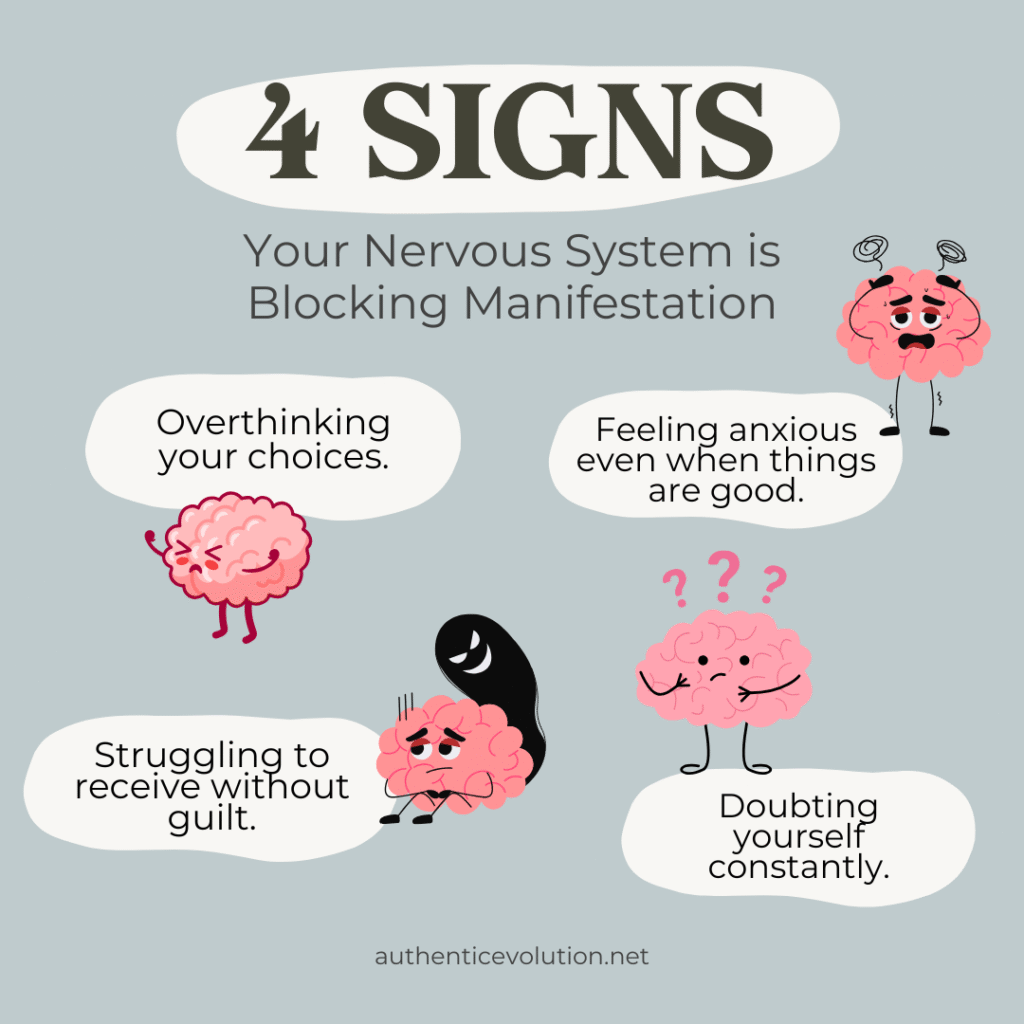
    4 Signs Your Nervous System is Blocking Manifestation - Infographic showing common signs like overthinking, feeling anxious even when things are good, struggling to receive without guilt, and doubting yourself. Tap to read how to fix it.

    What is the Role of the Nervous System in Manifestation?

    The nervous system plays a crucial role in the process of manifestation by influencing our emotional and psychological states. When we are in a state of balance, particularly with a regulated nervous system, we are better equipped to align our thoughts and beliefs with our desires. A well-functioning nervous system allows us to feel safe and secure, enabling us to tap into the subconscious mind and effectively utilize techniques like visualization and affirmations. Conversely, a dysregulated nervous system can lead to anxiety and limiting beliefs, which can hinder our ability to manifest our goals.

    How Can I Regulate My Nervous System for Better Manifestation?

    To regulate your nervous system, it’s essential to practice techniques that promote relaxation and calmness. Engaging in activities that activate the parasympathetic nervous system, such as deep breathing, meditation, and mindfulness practices, can help you achieve a more balanced nervous system. Moreover, regular physical activity, spending time in nature, and maintaining social connections can further support nervous system regulation. By creating a calm environment and utilizing affirmations and visualization techniques, you can enhance your ability to manifest your desires.

    What is the Difference Between the Sympathetic and Parasympathetic Nervous System?

    The sympathetic nervous system is responsible for the body’s fight-or-flight response, preparing us to react to perceived threats. This activation can lead to a dysregulated nervous system if it becomes chronic, resulting in stress and anxiety. In contrast, the parasympathetic nervous system promotes a state of relaxation and recovery, allowing us to feel safe and calm. A strong connection to the parasympathetic nervous system is vital for effective nervous system regulation for manifestation, as it encourages a receptive state where we can focus on our goals without the interference of stress responses.

    How Does a Dysregulated Nervous System Impact My Ability to Manifest?

    A dysregulated nervous system can create a barrier to effective manifestation. When the nervous system is in a state of chaos, it can lead to overwhelming feelings of fear and anxiety, often manifesting in physical symptoms such as a racing heart, shortness of breath, or a sense of impending doom. These emotions can create a cycle of worry, where the fear of feeling afraid heightens anxiety, making it difficult to engage in everyday activities.

    In such moments, it’s essential to recognize the triggers that contribute to these feelings. Understanding the root causes can help in developing coping strategies, whether through mindfulness practices, deep-breathing exercises, or seeking support from friends, family, or professionals.

    Ready to Manifest from Your Body, Not Just Your Mind?

    Join [The Collective] — my community where we practice grounded, nervous-system-aligned manifestation every day?

  • What If You’re Not Manifesting Wrong: You’re Just Not Feeling Safe Having It?

    You’ve done it all.
    Scripting. Journaling. Vision boards. Affirmations.
    Maybe you’ve even dropped cash on coaches, content, and courses promising breakthroughs.

    And yet… things still feel stuck.
    You start wondering if you’re doing it wrong. Or worse—if you’re the problem.

    I’ve been there too.
    I was doing everything “right.” Following all the manifestation rules.
    And still, nothing was clicking.

    Not because the tools didn’t work.
    But because my nervous system didn’t feel safe having what I was asking for.

    The Problem Wasn’t the Technique, It Was My Identity

    It wasn’t about the method.
    It was about who I was being when I used it.

    I was still showing up as the version of me who was used to disappointment.
    Used to bracing.
    Used to expecting things to fall apart just when they started to go well.

    So no matter how powerful my intentions were, I wasn’t embodying the version of me who could actually hold what I wanted.

    My body was still calibrated to lack.
    My nervous system expected struggle.
    And abundance? Love? Peace? They felt foreign. Unsafe.

    And when something feels unsafe, your body will block it.

    Safety Is the Missing Piece

    Here’s the real secret:
    You don’t attract what you want. You attract what you feel safe having.

    You can journal your heart out.
    You can visualize the perfect future.
    But if your nervous system still believes more = danger… it won’t stick.

    It’s not because you’re broken.
    It’s because your system is still protecting you the only way it knows how—by holding onto what’s familiar.

    Familiar ≠ good.
    Familiar = safe.

    Even if your comfort zone is chaos or scarcity, your body would rather stay there than risk unfamiliar ease.

    This Isn’t About Fixing Yourself

    Let’s be real: the industry often makes you feel like you’re the issue.

    “You must be blocked.”
    “You need to clear this belief.”
    “You’re not high vibe enough.”

    No.

    You’re not broken.
    You’re not blocked.
    You’re just not regulated to receive what you’re asking for yet.

    And the solution isn’t to try harder.
    It’s to build safety around the thing you want.

    That’s it.

    How to Make What You Want Feel Safe

    ✨ Start with where you already feel safe in your body.
    Anchor into those moments. Expand from them.

    ✨ Normalize what you want by being around it.
    Whether it’s love, success, or abundance, surround yourself with people, spaces, or even digital energy that make it feel possible.

    ✨ Regulate before you manifest.
    Breathe. Ground. Get into your body before you try to shift your life.
    I created The Manifestation Reset for this exact reason.

    ✨ Repeat, not for effort, but for familiarity.
    You’re not trying to convince the universe.
    You’re trying to teach your body that this gets to be normal now.

    Your Body Is the Portal

    You don’t manifest from thought.
    You manifest from identity.

    And that identity is housed in your nervous system.

    You don’t need more “hacks.”
    You need to get your body on board with the life you’re calling in.

    That’s when things start clicking, not because you forced it, but because you stopped resisting it without realizing.

    When Life Doesn’t Match the Vision

    You wrote the check. You said the affirmations.
    You lit the candle.
    And you still woke up in a life that feels far from what you want.

    This is where most people either give up… or pretend.

    But the middle?
    The messy, uncomfortable, nothing’s working yet middle?

    That’s where everything starts to reorganize.

    This is the space where your nervous system is learning to hold a new reality.
    This is where you choose to embody what you’re calling in, even if nothing around you reflects it yet.

    Embodiment Isn’t Pretending, It’s Meeting Yourself Where You Are

    Early on, I tried to fake it.
    Dress the part. Act “as if.”
    But it never felt real because it wasn’t.

    I hadn’t become her yet.

    The shift happened when I stopped bypassing and started anchoring.
    When I asked:
    How would I move today if I already trusted it was on its way?
    How would I treat myself?
    What would I choose, even in this in-between?

    And then I did that.
    Not for performance.
    For integration.

    Trust the Middle

    This isn’t the part you skip.
    This is the part that teaches your body to feel safe where you’re going.

    You’re not failing.
    You’re building capacity.

    Capacity to receive.
    Capacity to hold.
    The capacity to actually be the version of you that already lives what you’ve been asking for.

    And that version?

    She’s not forcing it.
    She’s not faking it.
    She’s becoming it—step by step, breath by breath, moment by moment.

    Final Words: Make It Safe. Make It Human.

    Manifestation isn’t about being perfect.
    It’s about being present.
    And regulated.
    And honest.

    You don’t need more mindset work.
    You need to bring your body with you into the life you’re calling in.

    That’s the shift.
    That’s where it starts to land.

    Let’s make manifestation safe again.
    Let’s make it human again.

    Let’s make it yours.

    🎧 Want to Start Receiving What You Actually Desire?

    The Identity Shift Sessions is a 7-part audio series to help you regulate your energy, reconnect with your truth, and embody what you’re here to hold.

    This isn’t about fixing anything. It’s about finally feeling safe being who you really are.

    👉 Start listening now

  • Do Viral Trends Influence Emotional Accountability? Exploring the Connection

    “Tell me your secret—I promise I won’t judge.”

    It’s a phrase that carries so much weight yet feels so easy to toss around, especially in a 15-second TikTok or Instagram Reel. Enter the viral “We Listen and We Don’t Judge” challenge: pairs sitting side by side, confessing secrets with a promise to keep their reactions neutral.

    It sounds wholesome, right? A safe space for vulnerability. A way to deepen connections while entertaining the internet. But behind the catchy tagline lies a deeper question: Are we really ready to listen without judgment?

    This trend isn’t just about airing quirky confessions for a laugh or a like. It’s a fascinating lens into how we define emotional accountability in the digital age—and how often we miss the mark. Let’s unpack this phenomenon, dive into the good, the bad, and the downright messy, and see what it teaches us about connection in a world obsessed with validation.

    The Allure of the Trend: Why We Can’t Look Away

    It Feels Like Real Connection

    In a digital world dominated by curated perfection, this trend offers something raw and unfiltered. Couples, friends, and family members sit shoulder-to-shoulder, sharing truths they might never admit in a typical conversation. From quirky habits like “I always eat your fries when you’re not looking” to heart-stopping confessions like “I still think about my ex,” the challenge pulls us into the intimacy of their relationships.

    Why We Love It: We crave authenticity. Watching others navigate these moments, even awkwardly, feels like a break from the polished highlight reels we’re used to.

    The Humor Factor

    Not all secrets are earth-shattering. Some are downright ridiculous, like “I’ve been hiding your socks because I hate folding laundry” or “I use your razor to shave my legs.” These lighthearted confessions keep the trend entertaining, making it easy for viewers to hit replay.

    But Here’s the Truth: Behind every laugh, there’s an underlying question: Are we sharing for connection—or for clout?

    Where Things Get Messy

    The Judgment-Free Zone Is a Myth

    Let’s be real: “We listen and we don’t judge” is more of a wish than a guarantee. Sure, you might promise not to judge your partner for eating fries in secret, but what about when the confession is heavier?

    Example: A viral video featured one partner admitting, “I’ve been texting my ex, but it doesn’t mean anything.” The other’s reaction—a forced smile and nervous laugh—said it all: The judgment-free promise was already broken.

    Why It Matters: Even when we want to listen without judgment, some confessions are just too big to brush off. This trend exposes our limits, showing that true emotional accountability takes more than good intentions.

    Public Vulnerability Isn’t Always Healthy

    Confessing your secrets in front of a camera invites a whole new layer of complexity. While the trend promises connection, it often delivers unintended consequences. Strained relationships, oversharing regret, and the internet’s brutal judgment are just the beginning.

    Internet Commentary:

    • “We listen and we don’t judge… but I’d leave after that.”
    • “This is why I don’t do relationships.”

    The audience becomes an invisible third party in these confessions, amplifying every reaction and creating pressure to perform.

    Performative Vulnerability vs. Genuine Connection

    Let’s talk about intention. Is the goal of this trend to foster real understanding—or just to go viral? When vulnerability becomes performative, it loses its authenticity.

    Case in Point: A pair confesses small, harmless secrets until one of them drops a bombshell, followed by an over-the-top reaction. While it makes for great content, you can’t help but wonder: Did they plan this? And if so, what does that say about the value they place on emotional accountability?

    What This Trend Teaches Us About Emotional Accountability

    Listening Without Judgment Is Harder Than It Looks

    The promise to “not judge” is deceptively simple. In reality, it requires empathy, patience, and the ability to separate someone’s actions from their character. Most of us aren’t conditioned to do this—especially when our emotions are involved.

    The Lesson: True accountability isn’t about suppressing judgment; it’s about navigating it honestly. If you’re upset by what someone shares, it’s okay to express that—but in a way that fosters dialogue instead of conflict.

    Boundaries Are Key

    Not every secret belongs in a TikTok challenge—or any public forum, for that matter. Healthy communication starts with understanding what’s appropriate to share and when.

    Example: If your confession has the potential to hurt someone, ask yourself: Is this the right time, place, and method to share this? The internet isn’t always the best mediator.

    Vulnerability Without Action Isn’t Enough

    Sharing secrets is just the first step. Emotional accountability also means taking responsibility for the impact of those secrets and working toward resolution.

    Story Time: A friend once told me about a confession they made during a similar exercise. The revelation hurt their partner, but instead of leaving it unresolved, they used it as a starting point for deeper conversations. The result? A stronger relationship built on honesty and mutual effort.

    Why Trends Like This Matter

    At its best, the “We Listen and We Don’t Judge” challenge reminds us of the power of vulnerability. It pushes us to think about how we communicate, how we listen, and how we respond to the messy realities of being human.

    But it also exposes the pitfalls of seeking validation through public confession. Vulnerability isn’t a performance—it’s an act of trust. And trust, once broken, isn’t easily repaired.

    Listen, Reflect, and Grow

    The “We Listen and We Don’t Judge” trend is a mirror, reflecting our collective yearning for connection, honesty, and understanding. But it’s also a reminder that emotional accountability starts offline, in private conversations where real growth happens.

    So the next time you’re tempted to share your deepest secret for the sake of a trend, pause. Ask yourself: Am I seeking connection—or attention? Because while the internet may applaud your vulnerability, it’s the relationships behind the scenes that truly matter.

  • Why Alignment Isn’t About Positivity, It’s About Identity

    We’ve been told for years that manifestation is about staying high-vibe.
    Smile more. Journal harder. Keep your energy “clean.”

    But that version of alignment? It’s performative.
    It’s shallow. And for most people, it’s exhausting.

    Alignment has nothing to do with how positive you feel.
    It has everything to do with who you are.

    You don’t manifest based on your mood.
    You manifest based on your identity.

    And if that identity is still rooted in fear, lack, or unworthiness?
    You can visualize all you want your nervous system will still pull you back to what feels familiar.


    The “Positive Vibes Only” Lie

    We’ve been conditioned to believe that alignment means joy 24/7.
    That if you’re doing it right, you should never feel anxious, disappointed, or pissed off.

    But you’re human.
    You’re living a real life.
    And if you’re someone inching toward 40, with hormones that forgot how to read the room… you already know emotions aren’t always pretty.

    Here’s the truth:

    Alignment doesn’t mean you feel amazing all the time.
    It means you live from a place that matches your truth—even when things are messy.

    And that truth? It lives in your identity, not your mood.


    When Manifestation Doesn’t Happen Like You Thought (Even If You’re Doing “Everything Right”)

    In 2017, I built a business that appeared to be successful from the outside.
    It was growing. Clients were coming in. Money was flowing.

    But I wasn’t.

    Behind the scenes, I was operating from a place of scarcity.
    I was masking fear with systems.
    I was overcompensating with strategy.
    And underneath the success, I didn’t actually feel like the version of me who could hold it.

    Then 2020 hit.

    I was navigating postpartum depression.
    Everything I had built felt far away from what I actually wanted to feel.
    And even though I was still technically manifesting money, clients, and visibility, the deeper dreams weren’t landing.

    Because deep down, I wasn’t aligned.
    I was chasing something I hadn’t become safe enough to hold.


    Alignment Is Identity, Not Emotion

    You can feel sad and still be in alignment.

    You can have a hard week and still be walking toward your next level.

    Because alignment doesn’t mean joy.
    It means congruence.

    It means the way you think, move, speak, and choose is in integrity with what you desire.

    Alignment is when you:

    • Spend money like someone who trusts their flow
    • Say no like someone who honors their energy
    • Rest like someone who knows their worth isn’t in their output

    And no, you don’t get there overnight.
    You build into it.

    You take small daily steps that affirm the identity of the version of you you’re becoming.
    Not just when you feel good. But especially when you don’t.


    High Vibes Don’t Manifest, Congruence Does

    You can light all the candles and script until your hand cramps.

    But if your body doesn’t believe it’s safe to receive?
    You’ll block the very thing you say you want.

    You don’t need more vision boards.
    You need identity reinforcement.

    Ask yourself:

    • Is how I spend aligning with the version of me I say I am?
    • Are my boundaries aligned with someone who feels safe to expand?
    • Am I still trying to “feel better” to be worthy of what I want?

    If you’re constantly chasing a good mood to manifest, you’re missing the point.

    You don’t need to be happy.
    You need to be whole.


    Manifestation Lands When It Feels Normal

    Your nervous system doesn’t care about what you desire.
    It cares about what feels familiar.

    So if struggle, scarcity, overgiving, or proving has been your baseline, you’ll unconsciously recreate those patterns even if you’re actively trying to change them.

    That’s why we shift identity first.

    We start reinforcing safety in new experiences.
    We build evidence that it’s safe to receive without faking it.
    We anchor into habits that reflect worth, not hustle.

    And we do it in small, doable, embodied ways.

    You don’t need to stretch so far past your current identity that your system collapses.

    You need to meet yourself where you are and shift from there.


    Final Reminder: Alignment Is Who You Are, Not How You Feel

    You’re not failing because you had a bad day.
    You’re not out of alignment because you cried on the kitchen floor.

    You can be in grief and still be growing.
    You can be overwhelmed and still be manifesting.
    You can be questioning everything and still be aligned with the life you’re building.

    So instead of asking, “How do I stay high-vibe?”
    Ask, “Who am I willing to become?”

    Because alignment is a frequency.
    And that frequency starts with truth.


    🎧 Want Support Becoming the Version of You Who Can Hold It All?

    The Identity Shift Sessions is a 7-part audio journey that helps you shift from chasing to embodying.
    Because you’re not here to perform your dream life.
    You’re here to live it.

    👉 Start listening now