dpafa

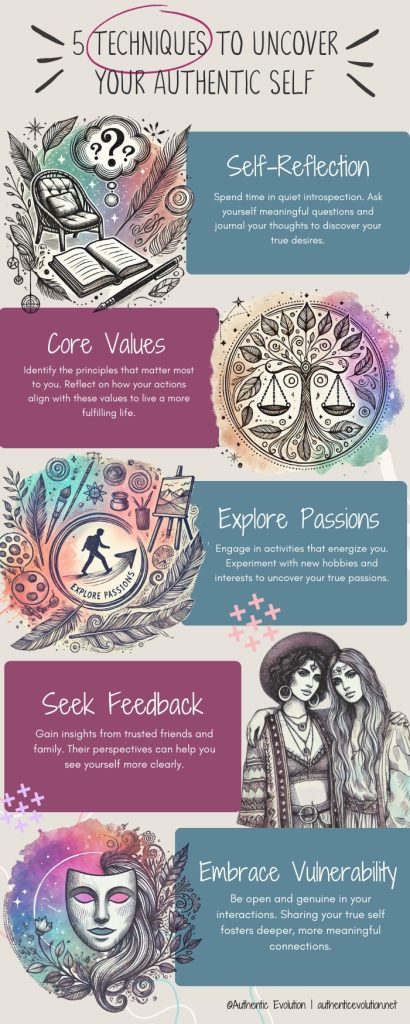
  • Uncover Your Authentic Self with These 5 Techniques

    Feeling disconnected from your true self? 

    Yeah, it happens. 😕

    With the world constantly pulling us in different directions, it’s easy to lose sight of who we really are. But what if you could find your way back to your authentic self and live a life that truly aligns with your values and passions?

    Here are five practical techniques to help you rediscover your genuine identity. 

    From deep self-reflection to embracing vulnerability, these steps will guide you on a journey to peel back the layers and reconnect with your core essence. 

    Ready to take the next step? Let’s get started on unveiling the real you.

    Unveiling Your True Self: A Step-by-Step Guide to Self-Discovery

    Step 1: Engage in Self-Reflection

    Self-reflection is where it all begins. Carve out some me-time, free from distractions. Find a quiet space where you can really dive into your thoughts and feelings. Ask yourself the big questions: What matters most to me? What brings me joy? What do I want to achieve?

    Journaling can be a great tool here. Write down your reflections without holding back. Over time, you’ll start to see patterns and themes that reveal your true desires and aspirations.

    Step 2: Identify Your Core Values

    Your core values are the guiding stars of your life. List out the qualities and principles that matter most to you—honesty, creativity, independence, whatever speaks to you. Reflect on how your actions align with these values. Are you living in tune with what you believe?

    Prioritize these values and use them as a decision-making guide. When faced with a choice, ask yourself which option best aligns with your core values. This leads to a more authentic and fulfilling life.

    Step 3: Explore Your Passions and Interests

    What makes you lose track of time and leaves you feeling energized? Think about activities that bring you joy—hobbies, creative pursuits, intellectual interests. Try new experiences to uncover hidden passions. Step outside your comfort zone and see what sparks your excitement.

    Notice the patterns and themes in your interests. These can reveal your true passions and help you align your life with what matters most to you.

    Step 4: Seek Feedback from Trusted Others

    While self-reflection is crucial, getting insights from others can also be incredibly valuable. Ask close friends and family for their honest perspectives on your strengths and unique qualities. What do they see as your defining characteristics?

    Be open to their feedback and use it to gain a more well-rounded understanding of yourself. Remember, this isn’t about seeking validation—it’s about seeing yourself through the eyes of those who know you best.

    Step 5: Embrace Vulnerability and Authenticity

    Unmasking your true self means getting real honest with yourself. Practice expressing your true thoughts and feelings in a safe space. Share your hopes, fears, and dreams without fear of judgment.

    Challenge yourself to be genuine in your interactions with others. Resist the urge to put up a façade or conform to others’ expectations. Let your unique personality shine through. When you show up as your authentic self, you invite others to do the same, creating deeper and more meaningful connections.

    Embracing your true self is a lifelong journey; an Authentic Evolution 🤭. 

    By engaging in self-reflection, identifying your core values, exploring your passions, seeking feedback, and embracing vulnerability, you can peel back the layers and reveal your true essence. As you gain a deeper understanding of yourself, you can make choices that align with your authentic self and create a life that truly reflects who you are.
    Overcoming Barriers to Self-Discovery: Strategies for Success

    Identifying and Challenging Limiting Beliefs

    Self-limiting beliefs often stem from past experiences, societal expectations, or negative self-talk. To overcome these beliefs, start by recognizing them when they pop up. Pay attention to your inner dialogue. Once you’ve identified a limiting belief, question its validity. Ask yourself: “Is this belief really true? What evidence supports it? Is there another perspective?”

    Reframing Limiting Beliefs

    After questioning your limiting beliefs, reframe them in a more empowering light. 

    Instead of thinking, “I’m not good enough,” try, “I’m constantly growing and improving.” 

    Replace negative self-talk with affirmations that support your authentic self, like “I am worthy of love and success.”

    Cultivating Self-Compassion and Acceptance

    Practicing self-compassion means treating yourself with kindness and understanding. 

    When you make mistakes, avoid harsh self-judgment. 

    Speak to yourself as you would a dear friend—with empathy and encouragement. 

    Recognize that imperfections are a natural part of being human and that your journey is unique.

    Developing a Supportive Inner Dialogue

    Focus on developing a supportive inner dialogue that encourages self-discovery. 

    Use positive self-talk to reinforce your commitment to personal growth. 

    Celebrate your successes, no matter how small, and acknowledge your progress.

    Overcoming Fear and Resistance

    Fear and resistance are common obstacles on the path to self-discovery. 

    You might fear what you’ll uncover about yourself or worry about how others will perceive you. 

    Acknowledge these feelings—they’re normal. 

    Reframe fear as an opportunity for growth and remind yourself that facing your fears is an act of courage.

    Taking Manageable Steps

    Break down the self-discovery process into small, manageable steps. 

    This helps build confidence and momentum. 

    Instead of overhauling your entire life at once, focus on one area of self-discovery at a time.

    By identifying and challenging limiting beliefs, cultivating self-compassion, and overcoming fear, you can break through the barriers to self-discovery. 

    Remember, setbacks are a natural part of the journey. 🫶🏼

    With persistence and self-kindness, you can uncover your authentic self and live a more fulfilling life.

    Cultivating Self-Awareness: The Foundation of Self-Discovery

    Practicing Mindfulness and Present-Moment Awareness

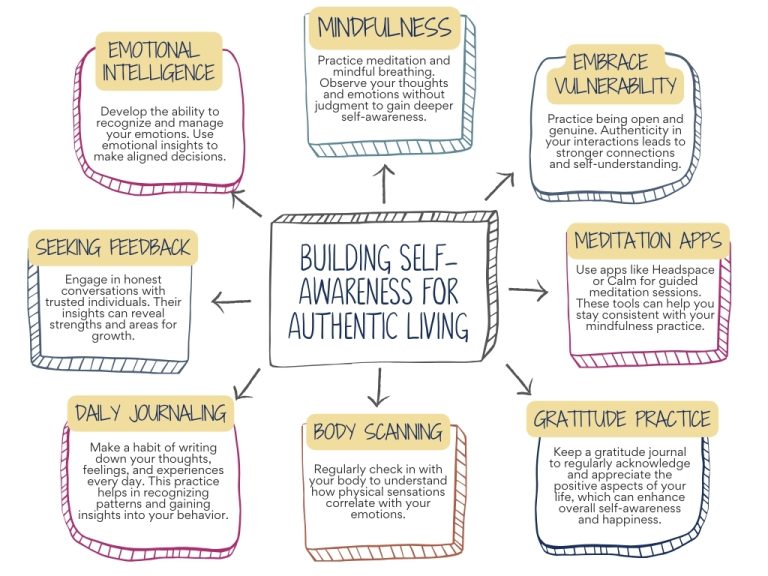
    Mindfulness is a powerful tool for cultivating self-awareness. Engage in mindfulness exercises to develop a keen sense of your thoughts, emotions, and physical sensations without judgment. This practice allows you to observe your inner experiences objectively, gaining insights into your authentic self.

    Mindfulness Resources for Deeper Exploration

    • “Wherever You Go, There You Are” by Jon Kabat-Zinn.
    • “The Power of Now” by Eckhart Tolle.
    • Meditation apps like Headspace and Calm.

    Exploring Your Personal History and Experiences

    Reflect on significant life events and examine patterns in your experiences. Create a timeline of your life, marking major milestones, challenges, and turning points. Consider how these events have influenced your beliefs, values, and behaviors.

    Tools for Exploring Personal History

    • Journaling.
    • Therapy or counseling.
    • “The Artist’s Way” by Julia Cameron.

    Developing Emotional Intelligence

    Emotional intelligence (EI) is the ability to recognize, understand, and manage your emotions and those of others. Developing EI is crucial for navigating self-discovery. Identify and label your emotions accurately, and explore how your feelings guide you towards or away from your true desires and values.

    Emotional Intelligence Resources

    • “Emotional Intelligence” by Daniel Goleman.
    • “Permission to Feel” by Marc Brackett.
    • Mayer-Salovey-Caruso Emotional Intelligence Test (MSCEIT).

    “Discovering your true self is about growth and transformation. It’s challenging and sometimes messy, but stepping out of your comfort zone and embracing change is the key to living authentically and finding true fulfillment.”

    — Danielle Aime

    Embracing Your Unique Identity: Celebrating Your Authentic Self

    Accepting and Appreciating Your Individuality

    Recognize and celebrate the qualities that make you unique. Develop a sense of pride in your individuality and build a strong foundation of self-acceptance.

    Practical Steps to Embrace Your Individuality

    1. Creativity: I have a unique ability to think outside the box and come up with innovative solutions to problems.
    2. Empathy: I am highly empathetic towards others and always strive to see things from their perspective.
    3. Resilience: I have a strong sense of determination and can bounce back from challenges and setbacks.
    4. Curiosity: I am constantly seeking to learn and grow, always asking questions and exploring new ideas.
    5. Adaptability: I can easily adjust to new situations and environments, making me versatile and open-minded.

    These qualities have shaped my life by allowing me to navigate through various obstacles and opportunities with grace and confidence. My creativity has led me to pursue unique and impactful projects, where I can express myself freely and make a positive impact on others. My empathy has helped me build strong relationships and connections with people from diverse backgrounds and cultures. My resilience has helped me overcome difficult times and come out stronger on the other side. My curiosity has driven me to constantly seek new experiences and knowledge, leading to personal growth and fulfillment. My adaptability has allowed me to thrive in ever-changing circumstances and environments, making me flexible and open to new possibilities.

    Self-Affirmations

    • I am unique, special, and worthy of love and acceptance just as I am.
    • I celebrate my individuality and honor the qualities that make me who I am.
    • I am confident in my abilities and trust that I have everything I need to succeed.
    • I embrace my uniqueness and shine brightly in the world.

    By recognizing and celebrating these qualities, I can continue to grow, adapt, and live a life that is authentically mine.
    Your Self-Discovery Questions Answered

    What does it mean to discover your authentic self?

    Finding your true self or real self means uncovering the essence of who you are beneath societal expectations and conditioning. Living authentically allows you to align with your core values and intuition, leading to a more authentic life.

    By exploring our childhood through the lens of shadow work, we can gain valuable insights into the origins of our shadow selves. This process involves acknowledging and validating the pain, fear, and anger we may have experienced as children, as well as recognizing the coping mechanisms and beliefs we adopted to navigate those challenges. It’s like piecing together a puzzle to see the whole picture.

    How can I live a more authentic life?

    To live an authentic life, start by navigating your self-discovery journey. Behaving in ways that reflect your authenticity and self-confidence will help you stay true to yourself effortlessly even when faced with challenges.

    Why is it important to prioritize self-discovery?

    Self-discovery is the path to self-discovery and personal growth. Taking the time to understand yourself better allows you to align with what’s truly important to you and behave in a way that reflects your core values.

    Is it easier said than done to live an authentic life?

    While it’s easier to say you want to live a more authentic life, living authentically requires effort and mindfulness. It may not always be easy, but the journey towards authenticity is worth it.

    How can I stay true to myself in a world that pressures conformity?

    In a world that is constantly trying to make you something else, it’s important to keep track of who you are. Take a step back when needed, and don’t let external influences shake your self-worth. Hard as it may be, staying true to yourself is a journey well worth it.

    What are the signs that indicate I’m not living authentically?

    1. Feeling unhappy or unfulfilled despite appearing successful or having material possessions.
    2. Constantly seeking approval or validation from others.
    3. Suppressing or denying your true thoughts, feelings, or beliefs in order to fit in or please others.
    4. Living a life that is primarily focused on meeting external expectations or societal norms rather than your own values and desires.
    5. Feeling disconnected from your true self or lacking a sense of purpose and meaning in life.
    6. Engaging in behaviors that are not in alignment with your values or beliefs.
    7. Putting on a facade or pretending to be someone you are not in various aspects of your life.
    8. Experiencing chronic stress, anxiety, or depression as a result of living inauthentically.
    9. Struggling to make decisions or feeling unsure about your life path and direction. 

    Embracing Your Authentic Self in 2025 and Beyond

    Self-discovery is a lifelong journey that requires courage and introspection. By engaging in self-reflection, identifying your core values, exploring your passions, seeking feedback, and practicing vulnerability, you can uncover the authentic you.

    Remember, self-discovery is about accepting and celebrating your unique qualities, strengths, and even imperfections. Be kind to yourself, challenge limiting beliefs, and cultivate self-compassion.

    How can you start incorporating self-discovery practices into your daily life? Set aside dedicated time for introspection, whether through journaling, mindfulness, or simply taking a few moments each day to check in with yourself. Surround yourself with supportive people, and seek guidance from mentors or professionals when needed.

    What aspect of self-discovery resonates with you the most, and how can you explore it further in the coming weeks?

  • Level Up Your Life: Key Insights for Intuitive Personal Growth

    Key Insights for Intuitive Personal Growth, Personal Development

    Ever wondered why most people trip up on the path to intuitive personal growth? It’s like standing at the base of a towering mountain with the latest climbing gear, yet feeling utterly clueless about where to start. Every year, countless folks embark on this journey, but a whopping 90% stumble before getting halfway up. Wild and a bit scary, right? Over the past decade, we’ve been obsessed with this phenomenon, diving deep into data to uncover patterns, lessons, and insights.

    Here’s the twist – the problem isn’t in the effort; it’s in the approach. By sharing these golden nuggets from our research, you’ll be ready to tackle the often tricky terrain of personal development with a fresh perspective and a solid plan.

    Trusting Your Intuition for Growth: The Key to Success

    Understanding the Concept of Intuition

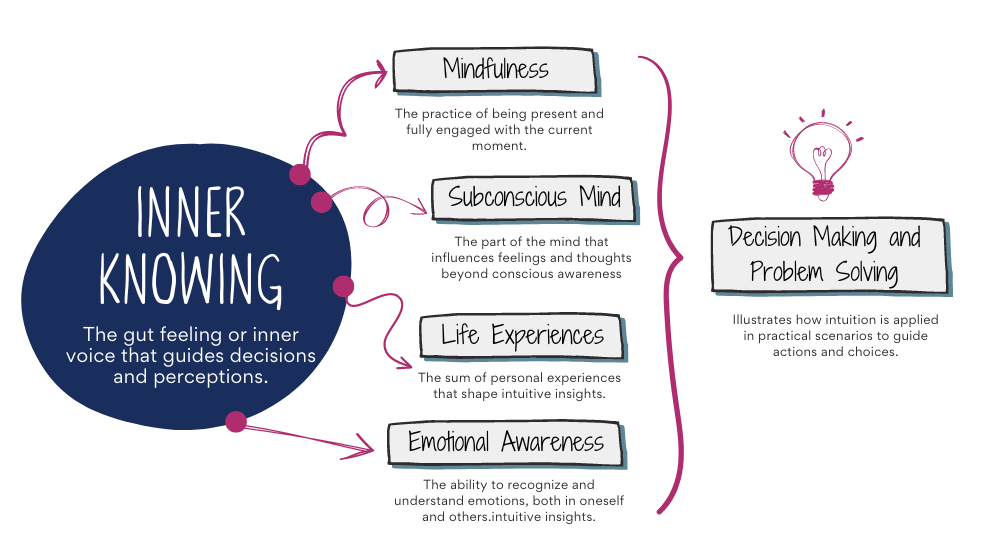
    Intuition might seem like magic at first, but it’s really not. It’s just our brain’s way of quickly processing information based on patterns and experiences. It gives us that gut feeling or instinct when we need it most.

    Intuition is a big deal in our lives, even if we don’t always notice it. It helps us make everyday decisions and sometimes even big, life-changing ones.

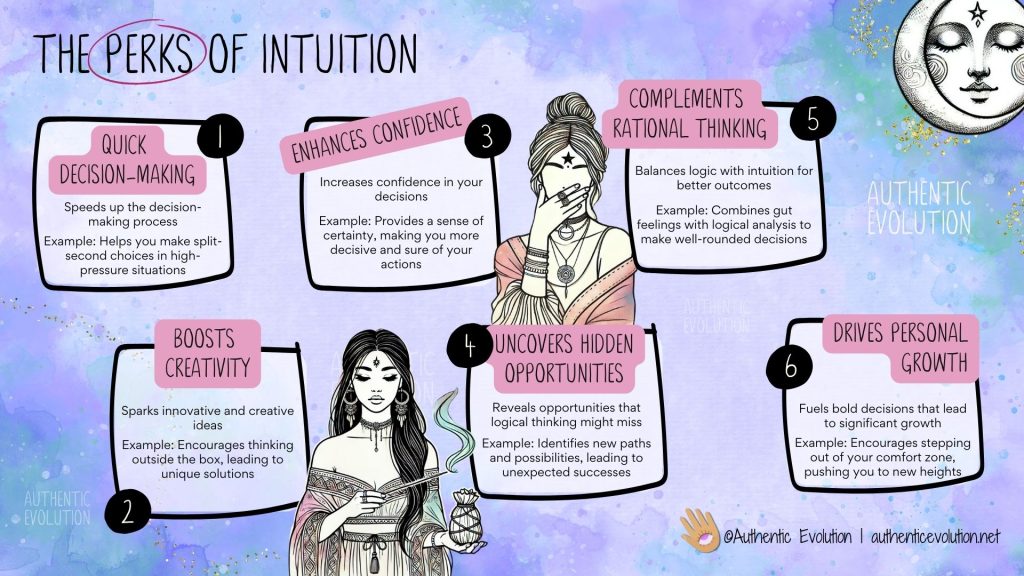
    Now, let’s talk about intuition and personal growth. Growing and improving often means stepping out of our comfort zones and making bold decisions. This is where intuition comes in. It helps guide us and makes us feel more confident in our choices, pushing us to grow in amazing ways.

    Moving on from a general understanding, let’s focus on the role of intuition in self-growth. Self-improvement often requires pushing beyond our comfort zones and making decisions that may go against societal norms. This is where intuition comes in. The instinctive guidance it offers can fuel bold decisions that lead to extraordinary growth. Trusting your intuition in these situations brings comfort and confidence, significantly impacting your development.

    Why Trusting Your Intuition is Important

    Intuition might seem like magic at first, but it’s really not. It’s just our brain’s way of quickly processing information based on patterns and experiences. It gives us that gut feeling or instinct when we need it most.

    Intuition is a big deal in our lives, even if we don’t always notice it. It helps us make everyday decisions and sometimes even big, life-changing ones.

    Now, let’s talk about intuition and personal growth. Growing and improving often means stepping out of our comfort zones and making bold decisions. This is where intuition comes in. It helps guide us and makes us feel more confident in our choices, pushing us to grow in amazing ways.

    Therein lies the importance — and power — of trusting your intuition. It is capable of discerning the invisible and seizing the elusive, propelling personal growth beyond uncharted territories. So trust your gut, follow your instincts, and prepare to be amazed at where your intuitive mind can lead you.

    Unlocking Your Intuition for Personal Development: A Step-by-Step Guide

    Step 1: Acknowledging Your Intuition

    In the rush and tumble of professional life, our deep-seated intuitive voice often goes unnoticed. Yet, when harnessed correctly, this innate voice can be instrumental in facilitating personal development and steering career trajectory. Recognizing intuition is a matter of introspection and self-awareness. It can often surface as that quiet inner voice, a gut feeling, or an instinctual nudge that suggests a particular course of action.

    Raising your consciousness to acknowledge these intuitive signals is an art that requires practice and patience. You can start by simply paying attention to how your body reacts in certain situations, or by noting down any recurring thoughts or feelings. These exercises put your intuition on your radar, making it less likely for you to dismiss these gut feelings in the hustle and bustle of decision-making.

    Step 2: Practicing Mindfulness

    Mindfulness, the act of being entirely present in the moment, can foster a beneficial environment for intuition to materialize. It provides the silence and space needed for the subtle whispers of intuition to be noticed above the cacophony of day-to-day distractions.

    Where regular meditation can be seen as a tool for developing mindfulness, mindfulness itself is a tool that can assist you in unlocking your intuition. Take a moment each day to simply be; immerse yourself in the present and pay attention to the various sensations. You could focus on your breath, listen to the ambient sounds, or feel the textures around you. This consistent awareness-building will enhance your ability to perceive intuitive messages.

    Practicing mindfulness isn’t tied down to cross-legged meditation on a yoga mat. It could be embedded into daily tasks like eating a meal, walking in the park, or simply sipping your morning coffee with focused attention. Incorporating these exercises in your routine can elevate your intuitive acumen.

    Step 3: Trusting and Acting on Your Intuition

    Acknowledging intuition and honing it through mindfulness would mean little if not acted upon. Trusting intuition can sometimes feel like a leap of faith, especially when it counters logic or common sense. However, our intuitive sense is powered by the subconscious mind, which factors in various information overlooked by our conscious mind.

    Realizing the importance of intuition isn’t as simple as flipping a switch. It might take time to understand and navigate your own intuitive experiences. Begin by observing patterns where your intuition has been accurate. Pay attention to times your gut instinct was spot-on. Practice by acting on small intuitive hunches, like picking an unknown book intuitively or trying a new food item at a restaurant. Gradually, as your trust in your intuition firms up, you’ll find yourself relying on it for the grander decisions of life.

    Power of Intuition for Personal Growth and Success: Unleashing Your Potential

    The Power of Intuition

    Let’s talk intuition. It’s like that secret superpower we all have but often forget to use. Albert Einstein, the genius himself, didn’t just rely on his smarts; he tapped into his imagination and intuition. He once said, “The intuitive mind is a sacred gift and the rational mind is a faithful servant.” So, if it’s good enough for Einstein, it’s good enough for us!

    Take Richard Branson, for example. The guy built Virgin Galactic not from a pile of market research but from a gut feeling that space travel could be a thing. Sometimes, your intuition knows what’s up even when logic is scratching its head.

    How to Unleash the Power of Your Intuition

    Okay, so how do you actually use this hidden talent? It’s simpler than you might think.

    First off, you’ve got to listen. In the chaos of daily life, that little voice of intuition often gets drowned out. But if you start paying attention, it can lead you to some pretty cool places and help you spot opportunities you’d otherwise miss.

    Next, trust your gut. Just like you trust your brain to handle math problems, you need to trust those gut feelings. They’re there for a reason.

    And here’s a pro tip: spend a few minutes each day just chilling out. Whether it’s meditation or just some quiet time, giving your mind a break helps your intuition come through loud and clear. A calm mind is where intuition thrives, helping you balance logic and gut feelings for some serious personal growth.

    When you align with your intuition, amazing things can happen. We’re talking about a more rewarding career, better relationships, and a zen-like approach to life.

    So, don’t underestimate your gut feelings. Trusting your intuition can unlock your true potential.

    Embracing Intuition for Remarkable Personal Growth: The Quantum Leap

    The Concept of Quantum Leaps in Personal Growth

    Personal growth isn’t a straight path. It often involves what we call “quantum leaps.” These are sudden and dramatic improvements that can significantly transform a person’s life – from their mindset to their skillset and even their lifestyle. Quantum leaps in personal growth aren’t about small, incremental changes; they encompass major shifts that redefine our visions, ambitions, and actions.

    The catalyst for these leaps is often our intuition. It’s our inner compass, our hunches, or gut feelings. It quietly signals us when the next big thing is around the corner, guiding us towards possibilities that can lead to these disruptive leaps in personal growth. Unlike logical reasoning, intuition taps into a deeper reservoir of experience, emotion, and instinct, and it’s proven to be a key driver in self-growth.

    However, one’s ability to tune into their intuition can largely determine the frequency and amplitude of these quantum leaps. Sometimes, small intuitive nudges might seem irrational or risky, but understanding and trusting these signals can result in remarkable transformations.

    How to Embrace Intuition for Quantum Leaps

    The first step in harnessing your intuition is to recognize it. Acknowledge that gut feeling or instinctive hunch rather than disregarding it. It’s crucial to listen to your body’s reaction to certain situations, as this can often indicate intuitive messages.

    Implement habits that encourage intuition. Mindfulness exercises like meditation or simple breathing exercises can create a calm mental space where intuition can emerge. Many executives use journaling as a way to capture intuitive thoughts and discern patterns over time.

    Lastly, trust your intuition. This is crucial for making quantum leaps, as intuition often suggests unconventional paths. Recognizing and understanding your intuitive sensations, coupled with the will to trust them, can open up opportunities for profound personal growth.

    Sure, embracing your intuition may at first feel risky, especially when it suggests breaking away from traditional paradigms. Yet, this leap of faith can lead to unforeseen opportunities and significant personal breakthroughs, pushing you towards a heightened level of self-actualization. Remember, no individual ever achieved something extraordinary by strictly sticking to the conventional path. By embracing your intuition, you open the door to quantum leaps in personal growth, creating a ripple effect of positive changes in every facet of your life.

    Counter-Intuitive Self-Growth Tactics: The Unconventional Path to Success

     Understanding Counter-Intuitive Tactics

    Counter-intuitive tactics are strategies that might seem contrary to instinct or common sense but deliver effective results.

    In the context of self-growth, these strategies often challenge conventional wisdom and standard practices, nudging you out of your comfort zone. These tactics push you to question prevailing wisdom, norms, or ‘obvious’ methods to personal growth. The essence of this approach is seeking progress through methods that may seem ‘backward’ at first glance.

    But why might these unusual strategies be effective for self-improvement? The answer lies in their nature. Because they’re different from the norm, they challenge your typical ways of thinking and behaving. This shake-up can spark a new perspective, spurring innovative thinking and igniting personal growth. Plus, embracing new and unconventional methods rekindles creativity, fostering an environment conducive to self-improvement.

    Examples of Counter-Intuitive Tactics for Personal Growth

    To bring this concept to life, let’s examine some tangible examples of counter-intuitive personal growth tactics.

    One example is the practice of embracing failure. While failure is generally seen as something negative to avoid, this approach encourages you to willingly fail, as it allows you to learn from your mistakes, leading to personal growth through improved resilience and adaptability.

    Another example is the strategy of “saying no more often.” While some view saying yes to every request as a path to success, this strategy focuses on asserting boundaries to protect your time and energy. This can lead to better focus, improved stress management, and ultimately, personal growth.

    These tactics, although they might seem counter-intuitive, can be powerful tools for self-growth, as they often address the underlying roadblocks holding us back. By implementing comfort-zone-pushing strategies, we’re likely to disrupt our typical patterns, leading to increased introspection, self-awareness, and ultimately, personal growth.

    Overall, the unconventional path to success challenges our preconceived notions about growth, pushing us to approach self-improvement from more diverse angles. As we step away from traditional methods and embrace more counter-intuitive tactics, we open ourselves up to new modes of thinking, innovative ideas, and increased self-awareness. Through this nuanced and rich approach, we gain more opportunities for transformational personal growth.

    As we move forward, remember the power of intuition in the journey of self-improvement shouldn’t be understated. Intuitive thinking can be a powerful ally as we navigate the unconventional road of counter-intuitive self-growth tactics.

    “Intuition is the whisper of the soul, guiding you toward your true path. Trust it, nurture it, and watch your life transform.”— Danielle Aime

    Fast Track Your Personal Development: FAQ

    What is personal development and why is it important?

    Self-growth, or self-improvement, is the continuous journey of enhancing your knowledge, skills, mindset, and overall well-being. It touches on all areas of your life, from self-awareness to communication skills. Investing in self-growth is key to unlocking your full potential, achieving your goals, and leading a more fulfilling life.

    How can I create a self-growth plan?

    Creating a self-growth plan starts with identifying your goals in various areas of your life, such as professional growth, physical health, and spirituality. Develop a roadmap that outlines specific actions, milestones, and timelines to help you achieve these goals. Be intentional and realistic when setting your goals to ensure they are achievable and aligned with your long-term vision.

    How can I improve my mindset for personal growth?

    Cultivating a positive mindset is essential for personal growth and self-esteem. Practice self-love and self-confidence by challenging negative thought patterns, fostering resilience, and developing a growth mindset that embraces challenges as opportunities for learning and growth. Engage in activities that promote clarity and self-awareness, such as meditation, journaling, or seeking guidance from a life coach to help you navigate your personal development journey with confidence.

    What role does self-awareness play in personal development?

    Self-awareness is the foundation of personal development as it involves understanding your strengths, weaknesses, values, and emotions. By enhancing your self-awareness, you gain deeper insights into your behaviors, habits, and motivations, which enables you to make informed decisions, set meaningful goals, and foster personal transformation. Embracing self-awareness also fosters personal growth and development. By truly understanding ourselves, our strengths, weaknesses, desires, and values, we are able to make more informed decisions and take purposeful actions towards our goals. Self-awareness allows us to identify areas of improvement and work on them, leading to a deeper sense of fulfillment and satisfaction in life. It also helps us establish healthier relationships with others, as we are better able to communicate our needs and boundaries. Ultimately, embracing self-awareness is key to living a more authentic and purposeful life. 

    Ready to Join the Successful 10%?

    Intuitive personal growth can be challenging, but it’s achievable. The data from the past decade shows that understanding yourself, setting clear goals, and welcoming change are essential for success.

    This isn’t just another blog post; it’s a guide to help you transition from where you are now to where you want to be. With this knowledge, you can join the successful 10% who have mastered intuitive personal growth.

    Pause for a moment and think about what you’ve learned, but don’t stop there. Start with a self-assessment to truly understand who you are. Set achievable goals right away, and be open to change.

    If you encounter any obstacles or need support, don’t hesitate to reach out. The journey to personal growth is a marathon, not a sprint. Equip yourself for the powerful journey of becoming your best self. The world needs your unique brilliance.


  • 15 Powerful Strategies to Embrace Your Authentic Self and Live Your Truth

    In a world that often pressures us to conform and fit in, living authentically can feel like an uphill battle. But what if I told you that embracing your true self is the key to unlocking a life filled with joy, purpose, and unshakable faith?

    Discovering and living your truth takes courage, self-awareness, and a willingness to grow. It’s a journey that requires you to face your fears, challenge societal expectations, and align your actions with your deepest values.

    But the rewards are immeasurable.

    By embracing your authentic self, you’ll experience:

    • Increased self-esteem and confidence
    • Deeper, more meaningful relationships
    • A greater sense of fulfillment and life satisfaction

    In this blog post, we’ll explore 15 powerful strategies to help you navigate the path to authenticity, from overcoming self-doubt and cultivating self-love to aligning your actions with your personal values. Whether you’re just starting your journey of self-discovery or looking to deepen your commitment to living authentically, these strategies will provide the guidance and inspiration you need to embrace your true self and live a life that truly reflects who you are.

    So, are you ready to dive into the most transformative journey of your life? Let’s get started and discover the power of living authentically.

    Overcoming Self-Doubt and Insecurity: Building Unshakable Confidence

    TL;DR:

    • Identify and challenge negative self-talk patterns
    • Cultivate self-compassion and prioritize self-care
    • Surround yourself with supportive, uplifting individuals

    Understanding Identifying and Challenging Negative Self-Talk

    Negative self-talk is a common barrier to embracing your authentic self. These critical inner dialogues can erode your confidence and stop you from living your truth. To get past this obstacle, start by recognizing patterns of self-criticism and negative thoughts. According to a study by the National Science Foundation, the average person has around 12,000 to 60,000 thoughts per day, many of which can be negative and self-critical. Pay attention to the words you use when talking to yourself. Are they harsh, judgmental, or just plain mean? Once you notice these negative thought patterns, practice reframing them into positive, self-affirming statements. For example, instead of thinking, “I’m not good enough,” try, “I am capable and worthy of success.”

    Make it a habit to catch and replace self-deprecating thoughts as they pop up. This process might feel weird at first, but with consistent practice, it will get easier, and your self-talk will gradually shift toward a more supportive and encouraging tone.

    Cultivating Self-Compassion and Kindness

    Self-compassion is a powerful tool in building unshakable trust which gives you confidence. 💪🏼 It means treating yourself with the same understanding, empathy, and kindness you would extend to a close friend. When you make mistakes or face setbacks, practice self-forgiveness instead of dwelling on perceived shortcomings. Remember, everyone struggles and experiences challenges; you are not alone in your imperfections. Embrace your humanness and show yourself the same compassion you would offer others in similar situations.

    Engage in regular self-care activities that boost your physical, emotional, and mental well-being. This could include exercising, practicing mindfulness, pursuing hobbies, or just taking time to relax. By prioritizing self-care, you show yourself that you are worthy of love, respect, and attention. A study by the American Psychological Association found that regular self-care practices can reduce stress and anxiety by up to 40%.

    Surrounding Yourself with Supportive People

    The people you surround yourself with can make a huge difference in your self-confidence and your ability to embrace your authentic self. Find people who uplift, encourage, and support you on your journey of self-discovery and growth.

    Identify the positive influences in your life—friends, family members, mentors, or colleagues who believe in you and celebrate your successes. Spend more time with these rockstars, engaging in open and honest conversations about your aspirations, fears, and challenges.

    On the flip side, set boundaries with those toxic or negative influences that drag you down. This might mean limiting contact with people who constantly criticize, belittle, or discourage you. Remember, you have the right to protect your emotional well-being and surround yourself with positivity. Life’s too short to hang out with people who suck the joy out of it!

    1. Identify your current support system and assess the quality of these relationships.
    2. Seek out new connections through shared interests, hobbies, or personal growth workshops.
    3. Practice vulnerability by sharing your authentic thoughts and feelings with trusted individuals.
    4. Express gratitude for the supportive people in your life, acknowledging their positive impact.
    5. Be a supportive presence for others, creating a cycle of mutual encouragement and empowerment.

    By challenging negative self-talk, cultivating self-compassion, and surrounding yourself with supportive people, you lay the foundation for building unshakable confidence. This confidence will serve as a catalyst for embracing your authentic self and living your truth, as you continue your journey of self-discovery and personal growth.

    Building Self-Awareness and Introspection: Discovering Your Authentic Self

    Exploring Your Values, Passions, and Purpose

    To discover your authentic self, start by thinking about the activities, causes, and experiences that light you up and make you feel truly alive. Ask yourself: What makes me feel engaged and excited? When do I feel most like myself? These questions can help you pinpoint your core values and passions.

    Once you’ve got a handle on your values, take a look at your life and see if it lines up with them. Are you spending your time and energy on what really matters to you? If not, it’s time to shake things up and prioritize what’s important.

    Dive into some self-discovery exercises to get to know yourself better. Journaling is a great way to explore your thoughts and feelings. Write about your experiences, dreams, and challenges. You can also try personality assessments like the Myers-Briggs Type Indicator or the Enneagram to get insights into your strengths, weaknesses, and motivations.

    Practicing Mindfulness and Self-Reflection

    Mindfulness is all about being present and aware of your thoughts, emotions, and surroundings without judgment. Regular mindfulness practices, like meditation or deep breathing exercises, can help you become more self-aware and introspective.

    Take some time each day for self-reflection. Look at your thoughts, emotions, and behaviors without judgment. Ask yourself: Why did I react that way? What triggered that emotion? What can I learn from this experience? By reflecting on your inner world, you can gain valuable insights into your authentic self.

    Get feedback from trusted sources, like close friends, family members, or a therapist, to gain a different perspective on yourself. Ask them what they see as your strengths and areas for growth. Be open to their insights and use them to guide your self-discovery journey.

    The Power of Solitude

    Spending time alone can be a powerful tool for self-discovery. When you’re free from distractions and external influences, you can tune into your own thoughts and feelings more easily. Set aside regular time for solitude, whether it’s a daily walk in nature, a weekly solo date, or an annual retreat.

    During your alone time, engage in activities that allow for introspection, like reading, writing, or creating art. Let your mind wander and explore whatever comes up. You might be surprised by the insights and revelations that emerge when you give yourself the space to be alone with your thoughts.

    Embracing Vulnerability

    Discovering your authentic self means embracing vulnerability. It means being honest with yourself about your fears, insecurities, and limitations. It also means being willing to share your true self with others, even if it feels scary or uncomfortable.

    Practice vulnerability by opening up to trusted friends or family members about your struggles and aspirations. Share your authentic thoughts and feelings, even if they’re messy or imperfect. By embracing vulnerability, you create opportunities for deeper connection and self-acceptance.

    Uncovering Your Unique Gifts and Talents

    Part of discovering your authentic self is recognizing and embracing your unique gifts and talents. These are the innate abilities and strengths that come naturally to you and bring you joy when you use them.

    To uncover your gifts and talents, reflect on the activities and pursuits that you excel at and enjoy. What comes easily to you? What do people often compliment you on? What do you lose track of time doing?

    You can also seek feedback from others about your strengths and talents. Ask friends, family members, or colleagues what they see as your unique gifts. Their observations can provide valuable insights into your authentic self.

    Once you’ve identified your gifts and talents, find ways to incorporate them into your life and work. Pursue hobbies or projects that allow you to use your strengths. Consider how you can apply your talents in your career or volunteer work. By aligning your life with your unique abilities, you’ll feel more fulfilled and authentic.

    “Surround yourself with people who lift you higher, challenge your fears, and celebrate your authentic self. Life’s too short for anything less.”
    — Danielle Aime

    Cultivating Self-Love and Acceptance: Embracing Your Unique Qualities

    Practicing Gratitude for Your Unique Attributes

    One key aspect of cultivating self-love and acceptance is recognizing and appreciating your unique qualities, skills, and accomplishments. Regularly acknowledging the positive aspects of yourself reinforces a mindset of self-appreciation and gratitude.

    Maintaining a Gratitude Journal

    A powerful tool for practicing gratitude is keeping a journal dedicated to the things you are thankful for. Take a few minutes each day to jot down your positive qualities, skills, and achievements, no matter how small they may seem. This practice shifts your focus towards what you value about yourself, fostering a deeper sense of self-love and acceptance.

    Celebrating Your Successes and Milestones

    Another way to cultivate self-love is by celebrating your successes and milestones. Often, we tend to downplay our achievements or brush them off as insignificant. However, taking the time to acknowledge and celebrate your accomplishments, regardless of their size, reinforces a sense of pride and self-worth. This could be as simple as treating yourself to a favorite meal or sharing your success with a loved one.

    Embracing Your Imperfections and Vulnerabilities

    In the pursuit of self-love and acceptance, it’s essential to recognize that perfection is an unrealistic and unattainable standard. Striving for perfection often leads to self-criticism and feelings of inadequacy, hindering your ability to embrace your authentic self.

    Recognizing the Unrealistic Nature of Perfection

    Understand that flaws and imperfections are a natural part of being human. Everyone has aspects of themselves they may not be entirely satisfied with, but these imperfections do not define your worth as a person. By acknowledging that perfection is an illusion, you can begin to embrace your authentic self, flaws and all.

    Sharing Vulnerabilities with Trusted Individuals

    Another way to cultivate self-acceptance is by sharing your vulnerabilities with trusted individuals. Opening up about your insecurities, fears, or past experiences can be a liberating experience. When you share your vulnerabilities with others, you create opportunities for deeper connections and support. Surround yourself with people who accept and appreciate you for who you are, flaws and all.

    Practicing Self-Compassion and Kindness

    Self-love and acceptance also involve treating yourself with the same compassion and kindness you would extend to a dear friend. Often, we are our own harshest critics, holding ourselves to impossible standards and engaging in negative self-talk.

    Challenging Negative Self-Talk

    Notice when you engage in negative self-talk or self-criticism. Challenge these thoughts by asking yourself if you would speak to a friend in the same manner. Replace negative self-talk with compassionate and understanding statements. Treat yourself with the same gentleness and understanding you would offer to someone you care about.

    Aligning Actions with Personal Values: Living Authentically

    Understanding Core Values

    Alright, let’s talk about core values. These are the fundamental beliefs that guide your actions and decisions. Think of them as your personal GPS, keeping you on track and aligned with what truly matters to you. Core values can include things like honesty, compassion, creativity, or independence.

    Making Decisions Based on Your Core Values

    Now that you’ve got a handle on your core values—awesome! Let’s use them as your guiding light for making those big life choices. Whether it’s a career move, a relationship, or a personal project, always ask yourself if the decision aligns with your true self. Take a moment to reflect and see if your actions are vibing with your values.

    It’s crucial to say “no” to opportunities or relationships that don’t fit, even if they seem super tempting. Remember, living authentically means staying true to yourself, even when it’s tough. By making decisions based on your core values, you’ll find a greater sense of fulfillment and purpose.

    Practical Steps to Make Value-Based Decisions

    • Write down your core values and keep them visible—sticky note on your mirror or a note in your phone works great.
    • When a decision pops up, hit the pause button and think about your values.
    • Ask yourself, “Does this choice align with my authentic self and my core values?”
    • If it doesn’t, have the guts to say no or find an alternative that fits better with your truth.


    Communicating Your Truth with Confidence

    To live authentically, you’ve got to speak your mind—clearly and respectfully. This means developing some solid communication skills and finding the courage to have those tough conversations.

    Start by practicing honesty with close friends or family. As you build confidence, take these skills to work or into your romantic life. Surround yourself with people who value authenticity and create a safe space for open, honest chats. By fostering a supportive network, you’ll find it easier to express your true self and navigate tricky conversations.

    Tips for Communicating Your Truth

    • Use “I” statements to express yourself, like “I feel frustrated when…” instead of “You always…”
    • Practice active listening—let others speak without interrupting or judging.
    • Be open to feedback and ready for constructive dialogue, even when it’s uncomfortable.
    • Regularly check in with yourself to ensure your communication style aligns with your values and true self.

    Connecting with Your True Self

    To live authentically, you’ve got to stay connected with your true self. This means tuning into your thoughts, emotions, and intuition regularly to understand your deepest desires and needs.

    Mindfulness practices like meditation or journaling are great for this. Set aside some “me time” each day to quiet your mind and focus inward. The more you tune into your inner world, the easier it’ll be to identify your true feelings and make decisions that align with your authentic self.

    Another great way to reconnect with your true self is by doing things that bring you joy and fulfillment. Whether it’s a creative hobby, spending time in nature, or volunteering for a cause you care about, prioritize experiences that let you express your authentic self and cultivate a sense of purpose.

    Practical Ways to Connect with Your True Self

    1. Dedicate at least 10-15 minutes daily to mindfulness practices like meditation or deep breathing.
    2. Keep a journal to explore your thoughts, feelings, and experiences, and to gain clarity on your authentic desires and needs.
    3. Make a list of activities that bring you joy and alignment, and commit to doing them regularly.
    4. Seek out opportunities to express your authentic self, like joining a community or group that shares your values and interests.

    “Authenticity is about being true to who you are, even when everyone around you wants you to be someone else.”

    — Danielle Aime 

    Understanding the Importance of Authenticity

    The Benefits of Living Authentically

    Increased Self-Esteem and Confidence

    Living authentically boosts your self-worth and confidence. By staying true to your values and beliefs, you build trust in yourself and your abilities. This self-assurance radiates outward, attracting others who appreciate and respect your genuine nature.

    Deeper, More Meaningful Relationships

    Being authentic helps you form deeper, more meaningful relationships. When you present your true self, you attract people who connect with the real you. These genuine connections foster trust, understanding, and intimacy, leading to more fulfilling relationships in both personal and professional spheres.

    Greater Sense of Fulfillment and Life Satisfaction

    When you live in alignment with your authentic self, you experience a greater sense of fulfillment and life satisfaction. By pursuing your true passions and living according to your values, you create a life that feels meaningful and purposeful.

    The Benefits of Living Authentically

    Feelings of Emptiness and Disconnection

    When you consistently hide your true thoughts, feelings, and desires, you may feel empty and disconnected from yourself and others. This lack of authenticity can lead to dissatisfaction and unfulfillment.

    Difficulty Forming Genuine Connections

    Living inauthentically is mentally and emotionally draining. Constantly monitoring your words, actions, and behaviors to maintain a false image can lead to increased stress and anxiety. This internal conflict takes a toll on your mental health and overall well-being.

    Understanding the importance of authenticity is crucial for personal growth and well-being. By embracing your authentic self, you can experience increased self-esteem, deeper relationships, and greater life satisfaction. Conversely, suppressing your true self can lead to feelings of emptiness, disconnection, and stress. Keep exploring the strategies for living authentically, and remember how powerful authenticity can be for your overall quality of life.

    Overcoming Obstacles to Authenticity

    Identifying and Challenging Societal Expectations

    From a young age, we’re bombarded with messages about how we should behave, think, and present ourselves. These expectations come from family, friends, media, and society at large. They shape our beliefs about what’s acceptable and what’s not, often leading us to conform to roles and behaviors that might not align with our true selves.

    To overcome this obstacle, start by recognizing the external pressures influencing your decisions and actions. Ask yourself, “Am I doing this because I want to or because it’s what others expect of me?” Challenge societal norms and their relevance to your unique identity. Just because something is considered “normal” doesn’t mean it’s right for you.

    Developing Courage to Deviate from Expectations

    Challenging societal expectations requires guts. It means being willing to stand out, be different, and potentially face criticism or disapproval. But remember, living authentically isn’t about pleasing everyone; it’s about being true to yourself.

    To build this courage, surround yourself with supportive people who encourage you to be your genuine self. Look up to role models who’ve successfully navigated the path of authenticity and draw inspiration from their stories. Practice asserting your boundaries and saying “no” to requests that don’t align with your values or goals.

    Navigating Fear and Discomfort

    Embracing your true self often involves stepping out of your comfort zone. It’s natural to feel fear and uncertainty as you explore uncharted territory within yourself. But these uncomfortable feelings are signs that you’re growing and evolving.

    Practicing Self-Compassion and Patience

    Be kind to yourself during this process. Understand that self-discovery is a journey, not a destination. There will be moments of doubt, setbacks, and confusion. Instead of being self-critical, practice self-compassion. Treat yourself with the same kindness and understanding you’d offer a good friend.

    Remember, change takes time. Be patient with yourself as you navigate the ups and downs of embracing authenticity. Celebrate small victories and acknowledge the progress you’re making, even if it feels slow at times.

    Seeking Support and Guidance

    You don’t have to go through this journey alone. Consider seeking the support of a therapist, coach, or mentor who can provide guidance and encouragement as you work through obstacles to authenticity. These professionals can help you gain clarity, develop coping strategies, and build the skills needed to live more authentically.

    Surround yourself with a community of like-minded individuals committed to living authentically. Join groups, attend workshops, or participate in online forums where you can connect with others who share your values and aspirations. These connections provide a sense of belonging and validation as you navigate the challenges of being true to yourself.

    Embracing Continuous Growth and Self-Discovery

    Recognizing that Authenticity is an Ongoing Journey

    Embracing your authentic self isn’t a one-time event but a continuous process of growth and self-discovery. As you go through life, your experiences, relationships, and evolving perspectives will shape and refine your understanding of who you truly are.

    Stay open to new insights and opportunities for personal development. By maintaining a growth mindset, you can continuously align your thoughts, actions, and decisions with your core values and authentic self.

    The Ever-Evolving Self

    Research suggests our personalities aren’t fixed but continue to develop and change throughout our lives. Embracing the concept of an ever-evolving self can be both liberating and empowering. It allows you to let go of rigid self-definitions and embrace the fluidity of your authentic identity.

    Celebrating Your Progress and Milestones

    As you embark on the journey of living authentically, it’s essential to acknowledge and celebrate your progress. Embracing your true self often requires courage, vulnerability, and a willingness to step outside your comfort zone.

    Reflect on the positive changes you’ve experienced since beginning this journey. Maybe you’ve become more assertive in expressing your needs or started pursuing a career path that aligns with your passions. These milestones, no matter how small, deserve recognition and celebration.

    The Power of Sharing Your Story

    Sharing your authentic journey with others can be a powerful way to inspire and encourage those who may be struggling to embrace their own truth. By openly discussing your challenges, triumphs, and the benefits of living authentically, you can create a ripple effect of positive change.

    Consider sharing your story through various channels, such as:

    • Writing a personal blog or article
    • Participating in a podcast or interview
    • Speaking at events or workshops
    • Engaging in authentic conversations with friends, family, and colleagues

    Your story has the power to resonate with others and provide them with the motivation and guidance they need to embark on their own authentic journeys.

    Engaging in Regular Self-Reflection

    To ensure you continue to grow and align with your authentic self, it’s crucial to engage in regular self-reflection. This practice allows you to assess your current thoughts, feelings, and actions and make necessary adjustments to maintain authenticity.

    Set aside dedicated time for self-reflection, whether it’s through journaling, meditation, or engaging in honest conversations with trusted confidants. Ask yourself questions like:

    • Am I living in accordance with my core values?
    • Are my current goals and aspirations aligned with my authentic self?
    • What areas of my life could benefit from greater authenticity?

    By regularly checking in with yourself, you can identify areas where you may have strayed from your authentic path and make conscious efforts to realign.

    Adapting to New Insights

    As you engage in self-reflection and gain new insights about yourself, it’s important to remain open to adapting your thoughts and behaviors accordingly. Authenticity isn’t about rigidly sticking to a fixed sense of self but allowing yourself to grow and evolve in response to new understandings.

    If you discover that certain aspects of your life no longer resonate with your authentic self, be willing to make changes. This might involve letting go of relationships, habits, or beliefs that no longer serve you and embracing new opportunities that align with your true purpose.

    Remember, embracing continuous growth and self-discovery is an essential part of living authentically. By staying open, curious, and committed to your ongoing development, you can cultivate a deep sense of alignment with your true self and experience the profound rewards of an authentic life.

  • Unlock the Power of Shadow Work: 111 Prompts for Deep Inner Healing

    TL;DR: Shadow work is one of the rawest, realest paths of self-healing. This blog breaks down what it actually is (without the fluff), how to approach it in a grounded way, and gives you 111 deep, soul-stirring prompts to start unearthing what’s been buried inside. Whether you’re new to shadow work or ready to go deeper, this is for the version of you that’s done pretending and ready to meet your truth.

    First of all, we’re not talking about Halloween, the dead of night, or something evil. That is exactly what shadow work IS NOT. And before I give you prompts with no context, I want to teach you the gift it can bring to your life.

    If you are reading this, something inside you wants more, knows there’s more, and wants to help you create what I call your Uniqucorn Life™—aka your ideal life, both internally and externally.

    So, are you ready to face your shadows and go on a journey of self-discovery? I promise you can do this.

    Shadowwork is a powerful tool for inner healing, allowing you to explore the hidden aspects of your psyche and open up to your authentic self. It’s not about diving into something spooky or sinister; it’s about uncovering the parts of yourself that you’ve hidden away, often because of fear or shame.

    With over 111 prompts, this ultimate shadow work toolkit is designed to guide you through the process of uncovering your deepest fears, shame, and limiting beliefs. By diving into your unconscious mind and confronting your shadows head-on, you’ll cultivate greater self-awareness, emotional resilience, and personal growth.

    Whether you’re new to shadow work or a seasoned practitioner, these prompts will help you navigate your complex inner world, fostering healing, integration, and wholeness. Prepare to unlock the power of shadow work and transform your life.

    Understanding Shadow Work

    What is shadow work and how does it contribute to my journey?

    Shadow work is a transformative practice that allows you to explore and integrate the hidden or repressed parts of your psyche. Often, these are traits and memories that have been buried within your unconscious mind. Carl Jung, a well known psychologist, introduced the concept of the shadow self. Engaging in this deep exploration can lead to significant personal growth and healing by helping you uncover and reconcile shadow traits and emotions that you have suppressed. Embracing your entire self is essential for self-awareness and helps foster self-love.

    The concept of the “shadow” in psychology

    The concept of the “shadow” was first introduced by Swiss psychiatrist Carl Jung in the early 20th century. According to Jung, the shadow represents the unconscious, repressed aspects of the self that we hide from others and even from ourselves. These aspects can include negative traits, such as anger, jealousy, and shame, as well as positive qualities that we may feel uncomfortable expressing, such as creativity, assertiveness, and sexuality.

    Jung believed that everyone possesses a shadow, and that it is a natural part of the human psyche. However, when we deny or suppress our shadow, it can lead to psychological issues, such as anxiety, depression, and self-sabotaging behaviors. By acknowledging and integrating our shadow, we can achieve greater wholeness, authenticity, and emotional well-being.

    Alright, enough with the textbook stuff—🥱. 

    The shadow in literature and popular culture

    Let’s talk about the shadow in literature and popular culture because, trust me, it’s everywhere!

    In Robert Louis Stevenson’s classic novel The Strange Case of Dr. Jekyll and Mr. Hyde, our buddy Dr. Jekyll has a bit of a problem. His shadow self, Mr. Hyde, is not just a minor inconvenience—he’s a full-blown villain! Mr. Hyde personifies all the dark, repressed desires that the upstanding Dr. Jekyll keeps under wraps. It’s like having an evil twin who takes over whenever you’re not looking.

    Now, let’s jump to a galaxy far, far away with Star Wars. Here, we have Darth Vader and Kylo Ren, who totally rock the shadow archetype. These guys are the poster children for inner darkness, constantly wrestling with their dark sides. Darth Vader? He’s got a whole redemption arc that screams shadow integration. And Kylo Ren? Well, he’s practically the definition of conflicted, caught between the light and the dark in a way that makes for some seriously dramatic storytelling.

    So, whether it’s Victorian literature or epic space sagas, the shadow is a concept that writers and creators love to explore. It’s all about those juicy, hidden parts of ourselves that make for the best stories and the most compelling characters.

    The purpose of shadow work

    Shadow work is about shining a light on those parts of ourselves we’ve shoved into the dark corners of our minds. It’s not always pretty, and it can be downright uncomfortable, but it’s also incredibly liberating. When we stop running from our shadows and start facing them, we open up to a whole new level of self-awareness and self-love.

    So, think of shadow work as a deep-cleaning session for your soul. You’re digging out all the hidden gunk, giving it a good look, and deciding what needs to stay and what can finally be let go. And guess what? You’re going to come out the other side feeling more whole, more authentic, and way more in tune with who you really are.

    The Benefits of Shadow Work

    Increased self-awareness and self-acceptance

    One of the best perks of shadow work is getting to know yourself on a whole new level. It’s like shining a spotlight on all the bits and pieces of you that you might have shoved into the shadows. By diving into exercises like journaling, meditation, and dream analysis, you can start to see those unconscious thoughts, beliefs, and behaviors that have been quietly running the show.

    When you bring these hidden parts into the light, you can start integrating them into your sense of self instead of pretending they don’t exist. This self-acceptance journey helps you embrace your whole self—strengths, weaknesses, and all. It’s about becoming the real, unfiltered you. đŸŽ­

    Emotional healing and growth

    Shadow work isn’t just about self-awareness; it’s a ticket to emotional healing and growth. We all carry some emotional baggage from past experiences, which can show up as limiting beliefs, self-sabotaging behaviors, and tricky relationship patterns.

    By engaging in techniques like inner child work, you can give those neglected or wounded parts of yourself the love and attention they deserve. This process helps release repressed emotions and heals old wounds. Plus, by identifying and challenging those limiting beliefs, you can develop a more empowering mindset that propels you towards your full potential. 

    Improved relationships and communication

    Believe it or not, shadow work can do wonders for your relationships and communication skills. As you understand your own triggers, patterns, and emotional responses better, you become more self-aware and mindful in your interactions with others.

    This heightened awareness helps you express your needs and set boundaries more effectively. You’ll also find yourself developing greater empathy and compassion for others because you’ll recognize that everyone has their own set of emotional struggles and wounds. 💞

    When you accept and integrate your shadow aspects, you become more accepting of others’ imperfections and vulnerabilities. This leads to more authentic and meaningful connections, as your relationships are built on a foundation of mutual understanding and acceptance. So, get ready to make those connections deeper and more genuine!

    “The shadow is a moral problem that challenges the whole ego-personality, for no one can become conscious of the shadow without considerable moral effort. To become conscious of it involves recognizing the dark aspects of the personality as present and real.”

    — Carl Jung

    How do I Start With Shadow Work Prompts for beginners?

    Identify and work with resistance

    Getting started with shadow work can seem like diving into the deep end of a pool, but don’t worry—I’ll be your lifeguard! 🌊 Start with some beginner-friendly shadow work prompts. These prompts are simpler and more approachable, giving you a gentle nudge into the deeper aspects of your subconscious and unconscious mind. Regularly engaging with these shadow work journal prompts helps you build a habit of introspective journaling and lays a solid foundation for more advanced exploration.

    Look shadow work is not easy. It involves facing some dark parts of your past and inner psyche. 

    But guess what? 

    Resistance is totally normal. 

    So, be kind to yourself! Grace 🫶🏼

    Here are a few tips to help you navigate this process:

    • Pay attention to your triggers: As you process memories, you might get hit by feelings of shame. Note the things that trigger you and bring up feelings in your body. 
    • Pay attention to the feelings in your body: Are you tense? Is your heart rate high? These sensations tell you something about your emotions. 
    • Take deep breaths as you process painful memories: Some feelings that surface might be tough. Breathe through it and speak to yourself with compassion. 
    • Take note of thought patterns and habits that repeat themselves: As you journal through the shadow work prompts, you may notice common themes. 

    Create a safe and supportive space for shadow work

    Since shadow work can be pretty intense, especially if you’ve experienced trauma, it’s essential to do this work in a safe and supportive space.

    Many people find safety in doing this work solo with a journal. But if you struggle with negative self-talk, solo might not be so safe after all. In that case, the best thing you can do is to go through this process with a safe friend, professional counselor, or therapist. They can help keep things from getting too overwhelming. 🛋️

    Express yourself creatively

    Who says shadow work prompts need to be confined to a journal? Not me! If you’re an artist, musician, dancer, or poet, use these prompts to paint, write a song, choreograph, or express your feelings creatively. đŸŽ¨đŸŽśđŸ’ƒđŸ–‹ď¸ 

    You might find this process therapeutic as you tap into and express your repressed shadow self. 

    So, whether you’re scribbling in a journal or dancing out your feelings, shadow work is all about exploring those hidden parts of yourself and bringing them into the light. 

    Tools and Techniques for Shadow Work

    If shadow work is bringing up big feelings or old wounds, this Step-by-step Guide to Healing Trauma with Spirituality can help you navigate it with compassion and clarity.

    Self-Reflection and Journaling Prompts

    Ready to dive deep into your mind? Let’s grab that journal and get to work! Here’s how you can start exploring your fears, shame, and limiting beliefs.

    Exploring your fears, shame, and limiting beliefs

    First things first, set aside some dedicated time for journaling—aim for at least 20-30 minutes per session. Find a quiet, comfy spot where you won’t be disturbed. Now, start writing about your fears, the things that make you feel ashamed, and the beliefs that hold you back in life. Don’t hold back—let your thoughts and feelings flow onto the page without judgment.

    Identifying patterns and triggers in your life

    As you journal, keep an eye out  for recurring themes and patterns in your experiences. đŸ” What situations or people tend to trigger those negative emotions or self-defeating behaviors? By pinpointing these triggers, you can boost your self-awareness and learn to react differently in challenging moments. 

    Examining your relationships and attachment styles

    Our early experiences with caregivers shape our attachment styles and relationship patterns throughout life. Use journaling prompts to dig into your family dynamics, romantic relationships, and friendships. Do you notice any patterns of codependency, avoidance, or anxiety in your connections with others? This awareness can help you cultivate healthier, more secure attachments.

    Emotional Healing Techniques

    Shadow work isn’t just about understanding yourself—it’s also about healing. Here are some emotional healing techniques to help you along the way.

    Mindfulness and self-compassion practices

    Mindfulness is all about bringing non-judgmental awareness to the present moment. Try practices like meditation, deep breathing, and body scans to observe your thoughts and feelings without getting swept away by them. Pair this with self-compassion practices like lovingkindness meditation or self-soothing touch to develop a kinder, more supportive inner dialogue. 🧘‍♂️💚

    Emotional release exercises

    Sometimes, you just need to let it all out. Here are a few emotional release exercises to try:

    • Crying: Give yourself permission to cry fully, without holding back. It’s a powerful way to release grief, sadness, or other painful emotions. đŸ˜˘
    • Screaming: Find a safe, private space (like your car or a secluded outdoor spot) and let out a primal scream. This can help release anger, frustration, or pent-up energy. 🗣️
    • Dancing: Put on music that matches your emotional state and let your body move freely. Dancing can be a fantastic way to express and process a range of emotions. 💃

    Art therapy and creative expression

    Creative activities like drawing, painting, sculpting, or collage-making can be a powerful way to access and express unconscious emotions and beliefs. You don’t need to be the next Picasso—the goal is to let your inner experience take shape in a tangible form. Use colors, images, and symbols to represent different aspects of yourself or your journey. 🎨✨

    “Until you make the unconscious conscious, it will direct your life and you will call it fate.”

    — Carl Jung

    Shadow Work and Inner Child Healing

    The connection between shadow work and inner child work

    Shadow work and inner child healing go hand-in-hand. Our early childhood experiences significantly shape our shadow selves—the parts of us we suppress or hide due to shame, fear, or societal expectations. Those negative experiences, unmet needs, and emotional wounds from our formative years can develop into shadow selves that keep influencing our thoughts, behaviors, and relationships even as adults. Yikes, right?

    By exploring our childhood through the lens of shadow work, we can gain valuable insights into the origins of our shadow selves. This process involves acknowledging and validating the pain, fear, and anger we may have experienced as children, as well as recognizing the coping mechanisms and beliefs we adopted to navigate those challenges. It’s like piecing together a puzzle to see the whole picture.

    Addressing unmet needs and healing childhood wounds

    Inner child work is all about giving your younger self the love, nurturing, and validation they might have missed out on. By connecting with your inner child and attending to their unmet needs, you can start healing those past experiences that have held you back.

    This process often involves:

    • Recognizing and validating the emotions and experiences of your inner child.
    • Offering compassion and understanding to your younger self.
    • Providing the love, support, and protection that might have been absent in your early years.

    Through this nurturing and reparenting process, we can integrate our shadow and develop a more whole, authentic sense of self. Think of it as giving your inner child the hug they always needed. 🤗

    Inner child healing exercises

    Engaging in specific exercises designed to heal and nurture your inner child can be a powerful complement to shadow work. These exercises help you connect with your younger self, process unresolved emotions, and provide the love and support you may have lacked in childhood. Here are some effective inner child healing exercises:

    Visualization and guided imagery

    Visualization and guided imagery involve creating a safe, nurturing space in your mind where you can interact with your inner child. This might include:

    • Imagining yourself as a loving, supportive adult comforting and protecting your younger self.
    • Visualizing your inner child in a peaceful, beautiful setting where they feel safe and loved.
    • Engaging in activities or conversations with your inner child that promote healing and connection.

    By regularly practicing visualization and guided imagery, you can strengthen your connection with your inner child and provide the emotional support they need to heal.

    Letter writing to your inner child

    Writing letters to your inner child is a powerful way to express the love, validation, and support they may have lacked in childhood. When writing to your inner child:

    1. Use loving, compassionate language that acknowledges their experiences and emotions
    2. Offer words of encouragement, protection, and unconditional acceptance
    3. Apologize for any times you may have neglected or dismissed their needs in the past
    4. Make commitments to honor and nurture them moving forward

    This exercise can help you develop a deeper understanding of your inner child’s needs and create a foundation of self-compassion and inner healing.

    Nurturing and reparenting techniques

    Nurturing and reparenting techniques involve treating your inner child with the love, care, and attention they deserve. This may include:

    1. Setting aside regular time to engage in activities your inner child enjoys, such as drawing, playing, or exploring nature
    2. Speaking to your inner child with kindness and patience, even when facing difficult emotions or behaviors
    3. Prioritizing self-care and boundary-setting as a way of modeling healthy adult behavior for your inner child

    By consistently engaging in nurturing and reparenting techniques, you can help your inner child feel seen, heard, and valued, which is essential for healing and integration.

    It changed my life.

    I know, I know—the word “shadow” might make you think of something dark and mysterious. And in some ways, it is. It’s all about the mysterious, forgotten parts of ourselves that we’ve left behind, ignored, and hurt.

    When my healing journey became more intentional and started moving like a freight train back in 2017, one of the first things the Universe led me to was shadow work, aka inner healing.

    Sure, there are some folks who get all hooked on the formalities and lingo like archetypes and all that jazz. But honestly? I find that keeping things simple and focusing on ourselves rather than getting lost in labels helps us progress a lot faster. It’s about connecting with our own truth, not just attaching to another concept.

    Before experiencing shadow work with a “formal” facilitator, I discovered that my natural spiritual gifts really shine in this area. I assist people in a quicker, more to-the-point experience, helping them bypass the resistance of the ego. It’s like having a spiritual fast pass! 🚀

    It’s a journey worth taking, and trust me, the transformation is life-changing.

    Ultimately, shadow work and inner child healing are powerful tools for self-discovery, emotional healing, and personal transformation. By exploring the connection between these two practices and engaging in specific exercises to nurture your inner child, you can uncover and integrate your shadow aspects, leading to greater wholeness, authenticity, and self-acceptance.

    Think of it this way: you’re giving those forgotten, little pieces of yourself a big, warm hug. By diving into shadow work and inner child healing, you’re not just patching up old wounds—you’re piecing together a more complete, authentic version of yourself. It’s about turning those dark, hidden parts into sources of strength and self-love.

    So, whether you’re journaling, visualizing, or having a heartfelt chat with your inner child, remember that this journey is about embracing every part of you. The more you explore, the more you’ll uncover your true self. And let me tell you, it’s a beautiful thing.

    Deepening Your Practice

    What are some effective shadow work prompts for healing?

    So, now that you understand what the heck shadow work even is, you’ll be doing this work more intentionally. Doing something just to do it? Well, what’s the point in that? I doubt much would come from it because somewhere inside, you might believe this is a quick fix. Spoiler alert: it’s not.

    Effective shadow work prompts for healing include questions that facilitate deep introspection and emotional release. For example, prompts like “What past traumas still affect you today?” or “Which shadow traits make you uncomfortable?” can help you dive into areas that need healing. These prompts help you confront and process these experiences, fostering healing and growth in your life.

    To make things easier, below you will find 111 prompts for you to go through. Choose a section, or gently go through them a little bit at a time.

    111 Deep Journal Prompts for Self-Discovery

    Journaling is a powerful tool for exploring the hidden parts of ourselves, offering self-awareness and personal growth. Below are 111 carefully crafted journaling prompts, divided into 11 sections, each designed to guide you through a journey of introspection and self-discovery.

    Take your time with these questions, and remember to approach this practice with compassion and openness. Your journey into the depths of your psyche can lead to insights and lasting change.

    Section 1: Early Life and Childhood

    1. What are my earliest memories, and how do they shape my current beliefs?
    2. What were the biggest fears I had as a child, and how do they affect me today?
    3. How did my parents’ attitudes and behaviors influence my self-worth?
    4. What childhood experiences do I often revisit in my mind, and why?
    5. How did my family handle emotions and conflict, and how has that impacted me?
    6. What childhood dreams did I let go of, and why?
    7. How did my upbringing shape my views on success and failure?
    8. What roles did I play in my family, and how do they affect my current relationships?
    9. How did my family’s financial situation impact my outlook on money and security?
    10. What childhood friendships influenced me the most, and how?
    11. How did my early educational experiences shape my self-esteem and confidence?

    Section 2: Relationships and Interpersonal Dynamics

    1. How do I handle conflict in my relationships, and why?
    2. What patterns do I notice in my romantic relationships?
    3. How do I react to criticism from others, and what does this reveal about me?
    4. In what ways do I seek validation from others?
    5. What fears do I have about intimacy and vulnerability?
    6. How do I cope with feelings of jealousy or envy in relationships?
    7. What boundaries do I set in my relationships, and are they healthy?
    8. How do I communicate my needs and desires to others?
    9. What unresolved issues do I have with past relationships?
    10. How do I show love and appreciation to others, and why?
    11. What role do I often take in group dynamics, and why?

    Section 3: Self-Identity and Personal Beliefs

    1. What labels do I use to define myself, and are they empowering or limiting?
    2. How do I perceive my strengths and weaknesses?
    3. What are my core values, and how do they guide my decisions?
    4. How do I handle feelings of inadequacy or imposter syndrome?
    5. What beliefs about myself do I need to challenge and change?
    6. How do I react to change and uncertainty?
    7. In what ways do I self-sabotage, and why?
    8. How do I practice self-compassion and self-care?
    9. What does my inner critic often say, and how can I counter it?
    10. How do I define success and happiness for myself?
    11. What aspects of my identity do I hide from others, and why?

    Section 4: Emotions and Mental Health

    1. How do I typically respond to feelings of sadness or grief?
    2. What triggers my anger, and how do I manage it?
    3. How do I cope with feelings of anxiety or stress?
    4. What emotions do I struggle to express, and why?
    5. How do I process and release negative emotions?
    6. In what ways do I avoid or numb my emotions?
    7. How do I practice mindfulness and stay present in the moment?
    8. What role does gratitude play in my emotional well-being?
    9. How do I handle emotional pain and disappointment?
    10. How do I nurture and uplift my mental health daily?
    11. What are my go-to methods for self-soothing and comfort?

    Section 5: Shadow Self and Unconscious Patterns

    1. What parts of myself do I reject or dislike the most, and why?
    2. How do I project my shadow onto others?
    3. What recurring themes or patterns do I notice in my life?
    4. How do my shadow parts influence my decisions and actions?
    5. What unconscious beliefs about myself need to be brought to light?
    6. How do I handle feelings of guilt or shame?
    7. What aspects of myself do I fear others discovering?
    8. How do I recognize when I am acting from my shadow self?
    9. What steps can I take to integrate my shadows into my whole self?
    10. How do I reclaim parts of myself that I have disowned?
    11. How can I transform my unconscious patterns into sources of strength and growth?

    Section 6: Goals and Aspirations

    1. What are my deepest desires and aspirations?
    2. How do I define and set meaningful goals for myself?
    3. What obstacles do I face in achieving my goals, and how can I overcome them?
    4. How do I stay motivated and focused on my aspirations?
    5. What fears hold me back from pursuing my dreams?
    6. How do I balance ambition with contentment?
    7. What are the most significant sacrifices I’ve made for my goals?
    8. How do I measure my progress and success?
    9. What legacy do I want to leave behind, and why?
    10. How do my goals align with my core values?
    11. What steps can I take to turn my dreams into reality?

    Section 7: Personal Growth and Development

    1. How do I define personal growth for myself?
    2. What areas of my life do I want to improve, and why?
    3. How do I seek and embrace new learning opportunities?
    4. What habits or behaviors do I need to change for my growth?
    5. How do I handle setbacks and failures in my growth journey?
    6. What role do mentors or role models play in my development?
    7. How do I stay open to feedback and constructive criticism?
    8. How do I celebrate and acknowledge my growth and achievements?
    9. What limiting beliefs do I need to let go of for my growth?
    10. How do I practice self-reflection and introspection regularly?
    11. What steps can I take to become the best version of myself?

    Section 8: Spirituality and Inner Wisdom

    1. How do I connect with my inner wisdom and intuition?
    2. What role does spirituality play in my life?
    3. How do I cultivate a sense of inner peace and harmony?
    4. What spiritual practices resonate with me the most?
    5. How do I navigate and understand my spiritual experiences?
    6. What does my inner guidance say about my life’s purpose?
    7. How do I find meaning and purpose in my daily life?
    8. What blocks my spiritual growth, and how can I overcome it?
    9. How do I integrate spirituality into my everyday routines?
    10. What spiritual beliefs or practices do I need to question or deepen?
    11. How do I stay connected to my higher self or spiritual source?

    Section 9: Creativity and Self-Expression

    1. How do I express my creativity, and what mediums do I enjoy?
    2. What inspires my creative pursuits and passions?
    3. How do I handle creative blocks or challenges?
    4. What fears or insecurities hold me back from expressing myself fully?
    5. How do I nurture and protect my creative energy?
    6. What role does creativity play in my overall well-being?
    7. How do I balance structure and spontaneity in my creative process?
    8. How do I share my creative work with others, and what impact does it have?
    9. What creative dreams do I want to pursue, and how can I start?
    10. How do I stay inspired and motivated in my creative endeavors?
    11. What messages or themes do I explore through my creativity?

    Section 10: Body and Physical Well-Being

    1. How do I feel about my body, and what influences these feelings?
    2. What role does physical health play in my overall well-being?
    3. How do I listen to and respect my body’s needs and signals?
    4. What habits or behaviors do I need to change for better physical health?
    5. How do I nurture and care for my body daily?
    6. What physical activities bring me joy and fulfillment?
    7. How do I handle body image issues or insecurities?
    8. What does my relationship with food and nutrition look like?
    9. How do I practice self-care and relaxation for my body?
    10. What physical goals do I have, and how can I achieve them?
    11. How do I cultivate a positive and loving relationship with my body?

    Section 11: Legacy and Life Purpose

    1. What do I want to be remembered for, and why?
    2. How do I define my life’s purpose and mission?
    3. What impact do I want to have on the world and those around me?
    4. How do I align my daily actions with my life’s purpose?
    5. What steps can I take to live a more purposeful and meaningful life?
    6. How do I stay true to my values and principles?
    7. What contributions do I want to make to my community or society?
    8. How do I inspire and uplift others through my actions?
    9. What lessons do I want to pass on to future generations?
    10. How do I balance personal fulfillment with contributing to the greater good?
    11. What legacy do I want to create, and how can I start building it today?

    Continuing the journey of shadow work

    How can I integrate shadow work into my daily routine?

    To incorporate shadow work into your daily life, start with short, manageable sessions. Set aside time each day for journaling using shadow work prompts. These prompts can guide your thoughts and help you explore hidden aspects of your shadow self. Over time, you’ll find that regular practice becomes a natural part of your mental and emotional upkeep, contributing to ongoing self-awareness and personal growth.

    Here’s How to Get Started:

    1. Set a Daily Time: Dedicate a specific time each day for your shadow work. It could be in the morning with your coffee or at night before bed. Consistency is key.


    2. Create a Comfortable Space: Find a quiet, comfortable spot where you can be undisturbed. Make it a space that feels safe and inviting.


    3. Start with Simple Prompts: Use beginner-friendly prompts to ease into the process. Questions like “What past traumas still affect you today?” or “Which shadow traits make you uncomfortable?” can be a good start.


    4. Be Gentle with Yourself: Healing is a non-linear process. It takes time, patience, and a willingness to sit with discomfort. Honor your own pace and be kind to yourself along the way.


    5. Seek Additional Support if Needed: If you find yourself needing more support, consider working with a therapist or counselor who specializes in shadow work or inner child healing. You might also explore books like “The Dark Side of the Light Chasers” by Debbie Ford or “Owning Your Own Shadow” by Robert A. Johnson for further insight and guidance.


    Remember, the goal of shadow work is not perfection, but wholeness. By courageously facing your shadows, you open the door to greater self-awareness, authenticity, and freedom. Trust the journey and know that every step is an act of deep self-love.