dpafa

  • 22 Easy Affirmations for Wealth and Abundance (That Actually Work)

    Money touches every part of our lives—housing, food, health, and even how we dream about the future. Yet, most of us were never taught how to have a healthy relationship with it. Instead, we carry limiting beliefs like “money is the root of all evil” or “I’ll never have enough.”

    For years, I watched my bank account hover at the same uninspiring numbers. I tried budgeting apps, devoured personal finance books, and dabbled in side hustles. But no matter how much I earned, I couldn’t break through my financial plateau. That’s when I realized the real problem wasn’t in my wallet—it was in my mind.

    The research is undeniable: your mindset shapes your financial reality. A 2019 study in Frontiers in Psychology revealed that positive beliefs about money improve decision-making and boost income. But here’s what’s often overlooked: creating a wealth mindset isn’t about wishful thinking. It’s about daily practices that rewire your thoughts, much like building a muscle.

    That’s where affirmations come in—not as empty platitudes, but as scientifically supported tools to challenge mental blocks and build habits of abundance. This guide shares 22 practical affirmations designed to reframe your relationship with money and empower your actions. You’ll also learn:

    • Why most affirmations fail (and how to avoid these mistakes).
    • How to pair affirmations with action for lasting change.
    • Daily habits to reprogram your mindset and attract opportunities.

    Are you ready to transform how you think about wealth—and start seeing results?


    Core Affirmations for Wealth and Abundance

    Affirmations are more than words; they’re tools for rewiring limiting beliefs and shaping a new financial reality. With consistency, emotional connection, and action, these affirmations can be transformative.


    1. Positive Wealth Mindset Affirmations

    To develop a wealth mindset, you need affirmations that help you focus on abundance instead of scarcity. Statements like:

    1. “I attract financial opportunities easily.”
    2. “I am deserving of wealth and success.”
    3. “I have the power to create financial abundance.”
    4. “Money flows to me effortlessly.”
    5. “My financial decisions lead to lasting wealth.”
    6. “I am confident in my ability to build wealth.”

    These affirmations act as mental reboots, challenging old beliefs and encouraging new ones.

    Why They Work

    Affirmations activate the brain’s reward system. When you repeat a positive statement, your brain releases dopamine—the “feel-good” neurotransmitter associated with motivation and reward. Over time, this strengthens neural pathways linked to confidence and opportunity-seeking behavior.

    Action Steps

    • Choose affirmations that feel authentic: If “I am wealthy” feels out of reach, start with “I am capable of building wealth.”
    • Integrate affirmations into your morning routine: Say them aloud while brushing your teeth or making coffee.
    • Combine affirmations with gratitude: For example, say, “I am grateful for the financial stability I am creating every day.”

    Pro Tip: Writing your affirmations by hand reinforces their impact. Studies show that the physical act of writing activates brain areas associated with memory and intention.


    2. Financial Success Affirmations

    Financial success isn’t just about knowing how to budget or invest—it’s about believing in your ability to thrive. Try these affirmations:

    1. “I make smart financial decisions every day.”
    2. “I am creating multiple streams of income.”
    3. “My skills and talents are valuable and in demand.”
    4. “I am financially free.”
    5. “I am open to learning new ways to create wealth.”
    6. “I am persistent and disciplined in achieving my financial goals.”

    Why They Work

    A 2015 study in Social Cognitive and Affective Neuroscience found that affirmations activate brain regions associated with self-esteem and problem-solving. This means affirmations don’t just make you feel better—they make you more likely to act.

    Action Steps

    • Say affirmations before tackling financial decisions: Repeat “I trust myself to make smart financial choices” before reviewing your budget.
    • Reflect on your progress: Use affirmations to celebrate small wins, like paying off a debt or saving $100.
    • Adapt affirmations as your goals evolve: What resonates today may need updating as you grow.

    Real-Life Example: Oprah Winfrey credits affirmations with helping her overcome poverty and embrace abundance. Her favorite? “I am open and receptive to all the good the universe has to offer.”


    3. Attracting Abundance Affirmations

    Shifting from a scarcity mindset to one of abundance is critical. Use these affirmations:

    1. “Abundance flows into my life in expected and unexpected ways.”
    2. “I am surrounded by wealth and success.”
    3. “I release all resistance to attracting money.”
    4. “I am aligned with the energy of abundance.”
    5. “The universe provides endless opportunities for wealth.”
    6. “I am grateful for the financial abundance in my life.”

    Why They Work

    Abundance isn’t just about money—it’s about relationships, time, health, and joy. Expanding your definition of wealth creates a more holistic and fulfilling approach to prosperity.

    Action Steps

    • Recognize abundance in everyday life: Write down three things you’re grateful for each evening.
    • Pair affirmations with visualization: Imagine your life as abundant, using all your senses to make it feel real.
    • Practice generosity: Sharing resources (time, money, or skills) reinforces the belief that there’s “more than enough” for everyone.

    Pro Tip: Use a vision board to amplify your affirmations. Seeing your goals daily strengthens your belief in their attainability.


    4. Overcoming Financial Blocks Affirmations

    Many people have deep-seated fears or limiting beliefs about money. These affirmations can help you break free:

    1. “I am worthy of financial success.”
    2. “I release fear and embrace financial freedom.”
    3. “Every challenge I face is an opportunity to grow.”
    4. “I am in control of my financial future.”

    Action Steps

    • Identify one specific financial block you want to overcome (e.g., fear of debt or imposter syndrome).
    • Pair your affirmations with tangible actions like creating a debt repayment plan or building an emergency fund.
    • Use journaling to explore the origins of these blocks and track your progress.

    Advanced Tips for Effective Affirmation Use

    Affirmations work best when paired with visualization, reflection, and consistent action. Here’s how to take your practice to the next level:


    Layer Affirmations with Visualization

    Visualizing success alongside affirmations enhances their impact. Imagine yourself living your financial goals—whether it’s owning a home, running a successful business, or traveling debt-free.

    How-To

    1. Close your eyes and say your affirmation.
    2. Picture what achieving it looks and feels like. Engage your senses (e.g., the sound of applause for a business win or the scent of the ocean on vacation).
    3. Repeat daily to reinforce the connection between belief and reality.

    Measure Progress for Motivation

    Tracking shifts in mindset and actions keeps you motivated. Use a journal or habit-tracking app to document your growth.

    Prompts to Reflect On

    • What changes have I noticed since starting affirmations?
    • What financial opportunities have I recognized and acted on?
    • How do I feel about money today compared to last month?

    Money is as much about mindset as it is about math. The affirmations in this guide offer a powerful way to shift your thoughts, align with abundance, and take actionable steps toward financial freedom.

    Start small. Choose one affirmation that resonates with you and say it with conviction. Pair it with one intentional action, like reviewing your budget or saving an extra $10 this week. Over time, these small shifts compound into lasting change.

    Remember: wealth isn’t just about money. When you think abundantly, you act abundantly—and that’s when the magic happens.

    Are you ready to rewrite your financial story? Let’s begin.
  • The 12 Universal Laws: Your Guide to Harnessing the Rules of Reality

    Physics tells us that energy never dies—it transforms. This principle doesn’t just apply to atoms or galaxies; it applies to human potential, too. The 12 Universal Laws aren’t mystical secrets hidden away in ancient texts; they’re natural forces that shape our everyday reality, much like gravity governs the physical world.

    In my late teens and twenties, I embarked on a relentless quest to figure out what was holding me back. I tried everything: therapy, short stints with prescription meds, ayahuasca journeys, affirmations, meditation apps, gratitude journals, and even those overpriced wellness retreats. Each method offered glimpses of clarity, but nothing clicked consistently. It wasn’t until I discovered the 12 Universal Laws and began integrating them with insights from neuroscience that everything shifted.

    What I learned blew my mind—and changed my life. These laws aren’t about wishful thinking or manifesting a mansion with no effort. They’re about understanding how reality works, blending ancient wisdom with modern science, and using that knowledge to live a life that feels aligned, purposeful, and abundant.

    Here’s what you’ll discover in this guide:

    • What each of the 12 Universal Laws means
    • How to apply them in practical, relatable ways
    • The science and wisdom behind these timeless principles
    • Common misconceptions and how to avoid them

    These laws are your operating manual for life. Whether you’re looking to break free from stagnation, reduce stress, or create lasting success, understanding these principles is the game-changer. Let’s dive in.


    The 12 Universal Laws and How to Use Them

    1. The Law of Divine Oneness

    This foundational law states that everything in the universe is connected. Your thoughts, actions, and energy impact not just you but the collective whole.

    • How to Use It: Start by recognizing that your choices matter. Whether it’s a kind word to a stranger or a shift in your perspective, every action ripples outward.
    • Action Tip: Each morning, ask yourself, “How can I positively contribute today?” This could mean helping a colleague, offering a genuine compliment, or simply being present in your interactions.

    Example: A small act like holding the door open for someone might seem trivial, but it could brighten their entire day—and their mood might ripple to others they encounter.


    2. The Law of Vibration

    This law reminds us that everything—our thoughts, emotions, and actions—vibrates at a specific frequency. Positive vibrations attract positive experiences, while negative vibrations pull in more of the same.

    • How to Use It: Pay attention to what raises or lowers your energy. Incorporate activities that elevate your vibration, like dancing, laughing, or practicing gratitude.
    • Action Tip: When negativity creeps in, consciously redirect your energy. For example, if you’re frustrated, step outside, take deep breaths, or listen to your favorite song.

    Example: If you’ve had a rough day, instead of spiraling into more stress, shift gears by calling a friend who makes you laugh or watching a show that lifts your mood.


    3. The Law of Correspondence

    “As above, so below.” This law reflects the idea that your outer world mirrors your inner state. Change begins within.

    • How to Use It: Examine your recurring thoughts and beliefs. Are they aligned with the life you want? Journaling can help identify patterns and shift negative narratives.
    • Action Tip: Write down one limiting belief that’s holding you back and rewrite it into an empowering one. For example, “I’m not good enough” becomes “I am capable and worthy of success.”

    Example: If you constantly feel undervalued at work, ask yourself if you’re undervaluing your own skills and contributions. Changing your internal dialogue often changes how others perceive you.


    4. The Law of Attraction

    This well-known law says that what you focus on expands. Your thoughts, energy, and actions magnetize similar experiences.

    • How to Use It: Beyond visualizing your goals, take action that aligns with them. Dreaming is the spark, but doing is the fire.
    • Action Tip: Spend five minutes daily visualizing your ideal life as though it’s already happening. Pair this with one small step toward your goal, like sending an email, updating your resume, or organizing your workspace.

    Example: If you’re manifesting financial stability, focus not on lack but on abundance. Shift “I don’t want to struggle” to “I’m building wealth through aligned actions.”


    5. The Law of Inspired Action

    This law is the counterpart to the Law of Attraction—intention without action leads nowhere. When inspiration strikes, act on it.

    • How to Use It: Pay attention to those intuitive nudges or sudden bursts of motivation. Trust them and take immediate action, even if it’s small.
    • Action Tip: Break larger goals into smaller, actionable steps. Focus on progress, not perfection.

    Example: If you feel drawn to write a book, don’t wait for the “perfect time.” Start with 10 minutes of writing each day and watch the momentum build.


    6. The Law of Perpetual Transmutation of Energy

    This law says energy is always in motion and can transform. Negative energy doesn’t have to stay negative.

    • How to Use It: When you feel stuck, move the energy. Dance, journal, or go for a walk to shift your state.
    • Action Tip: Identify one “energy leak” in your life and address it. Is it a toxic relationship, cluttered space, or habit that drags you down? Replace it with something energizing.

    Example: If a cluttered workspace is draining you, spend 15 minutes decluttering. You’ll feel lighter and more focused.


    7. The Law of Cause and Effect

    Every action has a consequence. What you put out into the world comes back to you, whether it’s kindness or negativity.

    • How to Use It: Be mindful of your choices and their ripple effects. Consistently sow seeds of positivity and integrity.
    • Action Tip: Before making a decision, ask yourself, “Is this aligned with the outcomes I want?”

    Example: Complimenting a coworker could boost their confidence and strengthen your relationship, creating a cycle of mutual support.


    8. The Law of Compensation

    This law states that you reap what you sow, though the rewards may not always appear immediately.

    • How to Use It: Trust the process and focus on consistent effort.
    • Action Tip: Acknowledge small wins along the way to stay motivated, even when the bigger picture isn’t clear.

    Example: Volunteering your time or skills without immediate reward often leads to unexpected opportunities or connections later.


    9. The Law of Relativity

    This law reminds us that challenges are relative. How we perceive a situation determines its weight.

    • How to Use It: Shift your perspective by comparing your challenges to your progress or blessings.
    • Action Tip: Create a gratitude list whenever life feels overwhelming.

    Example: Instead of thinking, “I’m not successful,” reflect on how far you’ve come compared to where you started.


    10. The Law of Polarity

    Every situation has opposites—light and dark, joy and sorrow. Both are necessary for balance.

    • How to Use It: Embrace challenges as opportunities to grow.
    • Action Tip: When faced with adversity, ask, “What’s the lesson here?”

    Example: A breakup might feel devastating but could lead to greater self-awareness and stronger future relationships.


    11. The Law of Rhythm

    Life ebbs and flows. Nothing stays constant, and understanding these cycles can help you navigate them with grace.

    • How to Use It: Recognize your personal rhythms and plan accordingly.
    • Action Tip: Schedule creative tasks during your high-energy periods and rest during your lows.

    Example: If you feel a dip in motivation, lean into rest instead of forcing productivity.


    12. The Law of Gender

    This law speaks to the balance of masculine (action-oriented) and feminine (intuitive) energies in all things.

    • How to Use It: Notice which energy you’re leaning into and balance it.
    • Action Tip: If you’re stuck in overdoing (masculine), schedule time to reflect or journal (feminine).

    Example: A balanced approach to a big project might include both brainstorming creative ideas and taking decisive action.


    The 12 Universal Laws aren’t just abstract concepts—they’re tools for designing a life that aligns with your highest potential. By understanding and applying these principles, you shift from living reactively to living intentionally.

    Start small. Pick one law that resonates with you and take a simple, actionable step today. Over time, these small shifts compound, creating lasting transformation.

    If you’re ready to dive deeper, download the Manifesting Blueprint here for step-by-step guidance on integrating these laws into your daily life. The universe is waiting for you to take the first step—why not start now?

  • The One Manifestation Tip That Stabilized My Mental Health

    From the time I was 18 until my late 20s, I was on an endless quest to fix what felt broken inside me. I tried everything—traditional therapy, brief stints with prescription pills, ayahuasca journeys, affirmations, mantras, meditations, gratitude journals, and even pricey retreats. But nothing worked consistently, and the same cycle of anxiety, worry, and mental chaos always found its way back.

    At my worst, anxiety attacks hit three times a week. Worry felt like a heavy backpack I couldn’t take off, no matter how hard I tried. Sleep was rare. Focus was impossible. My life felt like a constant loop of unrest.

    Then I stumbled across neuroscience and began piecing together my own ideas about manifesting, drawing on everything I’d learned during my journey. Around this time, I met a neuroscience professor who shared a manifestation method that seemed almost too simple to work. It wasn’t complicated meditation or lengthy journaling—just one daily practice that took less than 10 minutes.

    In the first week, I noticed subtle shifts. By month three, my anxiety attacks had completely stopped. After six months, my therapist asked what medication I was on. I wasn’t on any—this single manifestation technique had done what years of traditional methods couldn’t achieve.

    This isn’t about wishful thinking or generic visualization. It’s a science-backed practice combining neuroplasticity with intentional mindset shifts. Research from Harvard Medical School shows that manifestation techniques can reduce cortisol levels by up to 23%, a key marker of decreased stress and anxiety.

    In this guide, I’ll walk you through this transformative practice, common mistakes to avoid, and how to adapt it to your mental health needs. But first, let’s talk about why traditional manifestation methods often fail—and how this approach is fundamentally different.


    Why Traditional Manifestation Methods Don’t Always Work for Mental Health

    Manifestation techniques often focus on external goals—wealth, relationships, or career success. But when it comes to mental health, external wins won’t always translate to internal peace. The issue lies in addressing symptoms (stress or anxiety) without tackling the root cause: the stories your brain tells you about your life and worth.

    This practice is different. It focuses on rewiring those mental stories by blending:

    • Neuroplasticity: Training your brain to adopt new thought patterns.
    • Intentional Mindset Shifts: Focusing on what you want internally—peace, clarity, resilience—while reinforcing those desires through action.

    With that foundation in mind, here’s the method.


    Step 1: Use Positive Affirmations to Build Stability

    Positive affirmations aren’t just feel-good phrases—they’re tools to reprogram the brain. Repeating them consistently helps shift your internal narrative, replacing negative self-talk with empowering beliefs.

    Start Your Day with Purposeful Affirmations

    Begin each morning with 5 affirmations that resonate deeply with your needs. These aren’t random phrases—they’re statements rooted in your current mental state and aspirations. For example:

    • “I am safe and in control of my emotions.”
    • “I am resilient and capable of handling anything.”
    • “I am grateful for the calmness I am building within myself.”

    Speak these affirmations clearly and with intention. Say them out loud, letting your brain hear them as reality. Over time, this practice replaces negative mental chatter with positive, stabilizing thoughts.

    Boost Affirmations with Gratitude

    Pair each affirmation with gratitude. For instance, instead of saying, “I am strong,” try, “I am grateful for the strength I discover in myself daily.” Gratitude roots your affirmations in what you already have, making them feel more real and achievable.

    Action Steps:

    1. Choose 5 affirmations that align with your mental health goals.
    2. Add a gratitude statement to each one.
    3. Repeat them daily, out loud, for 5 minutes in the morning.

    Step 2: Visualize Inner Peace

    Visualization works by giving your brain a mental “rehearsal” of the emotions and calm you want to cultivate. It’s more than daydreaming—this practice physically rewires your brain to associate peace with your daily reality.

    Create a Mental Sanctuary

    Spend 10 minutes visualizing a peaceful place—a beach, a forest, or a cozy room. Picture it vividly: the colors, sounds, and smells. Imagine yourself completely at ease, letting worries drift away like clouds.

    This isn’t just relaxing. Studies show visualization reduces stress by lowering cortisol and activating your parasympathetic nervous system—the part of your brain responsible for rest and relaxation.

    Combine Visualization with Relaxation Techniques

    Pair visualization with progressive muscle relaxation. Tense and release each muscle group, starting from your toes and working upward. As you relax each part of your body, imagine peace flowing into that area.

    Action Steps:

    1. Set aside 10 minutes daily to visualize your peaceful place.
    2. Pair this with muscle relaxation for deeper calm.

    Step 3: Set Clear Intentions for Mental Wellness

    Intentions guide your focus, anchoring your mind to a specific desire or state. Unlike goals, which focus on external achievements, intentions are about how you want to feel and show up in the world.

    Write and Reflect on Your Intentions

    Choose one mental health focus—like reducing stress or feeling more grounded. Write a clear, simple intention, such as:

    • “I intend to find moments of calm today.”

    Keep this intention visible, and revisit it throughout your day. Reflect on your progress at the end of each day, noting moments when you aligned with your intention and areas where you can improve.

    Align Actions with Intentions

    Intentions aren’t enough on their own—you need action. For example, if your intention is to feel calm, align your day with calming practices like deep breathing or taking short breaks.

    Action Steps:

    1. Write one clear intention for your mental health each morning.
    2. Reflect on it nightly to track your progress.
    3. Take small, intentional actions that support your focus.

    Step 4: Practice Mindfulness for Mental Clarity

    Mindfulness grounds your thoughts in the present moment, reducing stress caused by worrying about the past or future.

    Mindful Breathing

    Practice deep, intentional breathing twice a day. Inhale deeply for four counts, hold for four, and exhale for six. Focus entirely on the sensation of breathing. This practice interrupts stress responses and promotes relaxation.

    Mindful Walking

    Take a slow, intentional walk, focusing on each step. Notice how your feet feel against the ground, how your body moves, and the sights and sounds around you. This practice pulls your attention out of your head and into the present moment.

    Action Steps:

    1. Dedicate 5 minutes to mindful breathing each morning and evening.
    2. Take a 10-minute mindful walk during your lunch break.

    Advanced Tips for Maintaining Results

    • Combine Practices: Pair affirmations with visualization for a more immersive mental health practice.
    • Track Your Progress: Use a journal to log daily reflections, noting what’s working and what needs adjustment.
    • Stay Flexible: Your needs may change—adapt your practices as needed to fit your evolving goals.

    Why This Approach Works

    This manifestation method isn’t about wishful thinking—it’s about intentional, science-backed practices that retrain your brain for mental clarity and calm. Techniques like affirmations, visualization, and mindfulness build a mental foundation that supports emotional resilience and reduces stress.


    Your Next Step: Download the Manifesting Blueprint

    Ready to take control of your mental health? Download the Manifesting Blueprint, a free resource to help you:

    • Implement these techniques step by step.
    • Customize practices for your specific mental health needs.
    • Track your progress and stay consistent.

    Your mental health deserves the same care and attention you’d give to any other part of your life. This practice isn’t about perfection—it’s about progress. By starting small and staying consistent, you’ll begin to notice shifts in how you think, feel, and approach the world.

    You have the power to reshape your mental health story. It starts with one step—and you’re ready to take it.

  • How Angel Numbers Help You Manifest What You Want

    Numbers follow us everywhere—on clocks, license plates, receipts, and even in random moments we least expect. But here’s the kicker: these patterns might not be random at all. They could be angel numbers—universal signals guiding you toward alignment and manifestation.

    I’ve spent years studying angel numbers and their connection to manifestation, not as a mystical concept but as a practical tool. Take my client Sarah, for example. When she started seeing 444 during her job hunt, she thought it was a coincidence. Three months later, she landed her dream role—with a salary of $44,400. Was it magic? Not quite. It was about understanding how to interpret and act on the signs she was seeing.

    Angel numbers are not about waiting for miracles; they’re about understanding a universal language that connects your conscious intentions with divine energy. Think of them as guideposts, reminding you that the universe is listening. In this guide, you’ll learn how to decode these numbers, align them with your goals, and avoid common misconceptions that might hold you back.


    Understanding the Connection Between Angel Numbers and Manifestation

    Angel numbers and manifestation work together like a GPS and a roadmap. While manifestation is about setting intentions and taking action, angel numbers act as subtle nudges to keep you on track.

    What Are Angel Numbers?

    Angel numbers are repeating number sequences (like 111, 444, or 888) that are believed to carry spiritual messages. They’re often seen as signs of alignment and encouragement from the universe. Think of them as “divine winks” that remind you to focus on your goals.

    • Examples of Common Angel Numbers:
      • 111: A fresh start. Your thoughts are rapidly manifesting, so focus on what you truly want.
      • 444: Stability and alignment. Trust the process—you’re on the right path.
      • 888: Abundance and prosperity. Financial and material success are on their way.

    Why Angel Numbers Matter in Manifestation

    When used effectively, angel numbers help clarify your intentions, validate your actions, and reinforce your belief in the process. They’re like gentle nudges from the universe, reminding you to stay focused and aligned.


    How to Interpret Angel Numbers for Manifestation

    Decoding angel numbers isn’t about blindly following rules—it’s about tapping into your intuition and aligning their meanings with your unique situation.

    Step 1: Notice the Patterns

    The first step is awareness. Start paying attention to recurring numbers in your daily life. Are they showing up during moments of doubt, decision-making, or inspiration?

    Example: Seeing 222 repeatedly while working on a new project might suggest you’re building something meaningful and need to maintain balance.

    Step 2: Reflect and Record

    Keep a journal to track your angel number sightings. Write down:

    • The number you saw.
    • The time and place you noticed it.
    • How you felt or what you were thinking in that moment.

    Over time, patterns may emerge, helping you understand what these numbers mean for you.

    Pro Tip: Add a “Reflection” section in your journal to note any actions you took or results you noticed after encountering a specific angel number.


    Using Angel Numbers to Manifest Money and Success

    Money is one of the most common topics in manifestation, and angel numbers can offer guidance in this area.

    Examples of Angel Numbers for Financial Goals:

    • 888: This number is strongly tied to wealth and abundance. If you’re seeing 888, it’s time to focus on your financial goals with confidence and clarity.
    • 444: Stability and progress. This number reminds you to take practical steps toward financial security.

    Action Steps:

    1. When you see a financial angel number, take it as a cue to evaluate your money goals. Are they aligned with your long-term vision?
    2. Visualize abundance as though it’s already yours. Imagine receiving checks, promotions, or other forms of wealth.

    The Psychology Behind Angel Numbers

    Science supports the idea that focusing on patterns—like angel numbers—can influence our mindset and behavior. This phenomenon, known as confirmation bias, makes us more aware of opportunities that align with our goals.

    A study in the Journal of Positive Psychology found that affirmations and visualization techniques improve motivation and goal achievement. Angel numbers act as triggers for these practices, reinforcing your belief in the possibility of success.


    How to Align Angel Numbers With Your Manifestation Practice

    Consistency and intention are key when integrating angel numbers into your daily life.

    Morning Routine:

    Start your day by visualizing your goals and inviting clarity. Use angel numbers as affirmations or reminders:

    • “111: My thoughts are powerful. I choose to focus on abundance.”
    • “444: I am grounded and supported by the universe.”

    Evening Reflection:

    Before bed, reflect on any angel numbers you encountered. Write down:

    • What actions you took after seeing them.
    • Any progress or alignment you felt throughout the day.

    Common Misconceptions About Angel Numbers

    1. They’re Not Quick Fixes: Angel numbers don’t replace effort—they guide it. You still need to take inspired action.
    2. They’re Not Always Positive: Sometimes, numbers like 555 (symbolizing change) can feel disruptive. Use these moments as opportunities to reassess and adapt.
    3. They’re Personal: While general meanings exist, angel numbers speak uniquely to you. Trust your intuition over external interpretations.

    Real-Life Example: The Power of 444

    Let’s circle back to Sarah’s story. During her job search, she kept seeing 444. At first, she ignored it, but then she decided to take it as a sign to focus her energy. She updated her resume, networked with colleagues, and applied to positions aligned with her values. Three months later, she landed her dream job with a salary that reflected the same number she’d been seeing: $44,400.

    The takeaway? Angel numbers work when you combine awareness with action. They’re not magical solutions but powerful tools for staying aligned with your goals.


    Download Your Free Manifesting Blueprint

    Angel numbers are just one piece of the manifestation puzzle. To fully unlock your potential, you need a clear roadmap.

    That’s why I created the Manifesting Blueprint—a free resource to help you:

    • Align your energy with your desires.
    • Use tools like angel numbers, visualization, and affirmations effectively.
    • Take actionable steps toward your goals with confidence.

    Click here to download your Manifesting Blueprint and start turning signs into success today.


    Final Thoughts

    Angel numbers are more than just repeating digits—they’re reminders of your connection to something greater. You can align more deeply with your manifestation goals by noticing these signs, reflecting on their meanings, and taking action.

    The universe is always speaking to you. Are you ready to listen? Start small, stay consistent, and trust the journey. Your manifestation practice is waiting to unfold.

  • Manifesting vs. Law of Attraction: How to Use Both to Your Advantage

    Can manifesting and the law of attraction truly unlock your potential? Absolutely. But here’s the kicker—you can’t just toss out a wish into the universe and hope Amazon Prime-level delivery follows. To truly harness their power, you’ve got to understand how these concepts differ and complement each other.

    After working with over 100 individuals navigating these practices, one truth emerged loud and clear: success isn’t about how many vision boards you glue together or how many affirmations you chant in your car. It’s about using these tools intentionally. Think of manifesting and the law of attraction as a dynamic duo—Batman and Robin of personal growth. They work best when you understand their unique roles.


    The Key Distinction: Compass vs. Journey

    • The Law of Attraction: Your inner compass, aligning thoughts and energy to guide you toward what you want.
    • Manifesting: The journey, requiring you to take intentional actions and align your inner and outer worlds.

    When used together, these practices create a power-packed system for authentic, lasting change. This guide will help you understand how they differ, how they work together, and how to use both to design a life that feels aligned with your highest self.


    What is Manifesting?

    Manifesting is more than daydreaming with a Pinterest board. It’s about building a bridge between your inner desires and external reality. Imagine your dream life as a destination. Manifesting is the act of packing your bags, mapping the route, and actually hitting the road.

    Manifesting Isn’t Magic (But It Feels Like It)

    A common myth is that manifesting is just wishful thinking. Spoiler alert: it’s not. Manifesting is grounded in intentional practices that align your energy and actions with your desires. Think of it as a co-creation process between you and the universe. You dream it, you act on it, and the universe meets you halfway.

    Key Tools for Manifesting

    1. Visualization: Your mental rehearsal. Picture your goals in vivid detail. Feel the emotions tied to achieving them.
    2. Affirmations: These are power statements that rewire your subconscious beliefs. Speak them as if your goals are already achieved.
    3. Inspired Action: This is where the magic gets practical. Action bridges the gap between desire and reality.

    A Personal Example

    When I first began practicing manifesting, I wanted a home that felt like an oasis—a place where I could both create and unwind. I started by visualizing myself sitting on a porch, surrounded by trees and a tranquil pond. Every morning, I spent five minutes imagining that moment as if it was already real. But I didn’t stop there. I started saving for a down payment, decluttering my space, and touring properties that aligned with my vision. Within a year, I was sitting on that very porch, marveling at how a once-distant dream had become my reality.

    Action Steps to Start Manifesting

    • Dedicate 5–10 minutes daily to visualize your goals.
    • Write affirmations that make your heart race with excitement.
    • Take one actionable step each day toward your dream, no matter how small.

    Pro Tip: Create a vision board. But don’t stop there. Place it somewhere you’ll see daily to keep your goals front and center.


    What is the Law of Attraction?

    The law of attraction is all about energy. It’s the belief that “like attracts like”—your dominant thoughts, feelings, and beliefs act as magnets for similar experiences.

    Imagine your energy as a radio frequency. If you’re broadcasting self-doubt or scarcity, you’ll attract more of the same. But when you tune your frequency to gratitude, abundance, and belief, you open the floodgates for positive experiences.

    How the Law of Attraction Works

    1. Energy Alignment: Your emotions and thoughts create a vibrational blueprint that shapes your reality.
    2. Belief as the Foundation: Without genuine belief, the law of attraction stalls. Doubt is like trying to drive with the parking brake on.

    Science Says It Works

    Studies in psychology suggest that visualization and positive reinforcement can rewire neural pathways, making us more likely to pursue opportunities aligned with our goals. For example, a study published in Psychology of Sport and Exercise found that athletes who visualized their success improved their performance significantly compared to those who didn’t.

    Action Steps to Align with the Law of Attraction

    • Set clear, intentional goals that resonate with your core values.
    • Cultivate gratitude to elevate your vibration.
    • Release limiting beliefs through journaling, meditation, or EFT tapping.

    Manifesting vs. Law of Attraction: The Core Differences

    Let’s get one thing straight: manifesting and the law of attraction are not interchangeable. They’re two sides of the same coin, each playing a crucial role in creating your dream life.

    The Breakdown

    • Manifesting: Focused on doing. It’s about taking intentional actions to bring desires into reality.
    • Law of Attraction: Focused on being. It’s about aligning your thoughts and emotions with your desires.

    How They Work Together

    The law of attraction sets the stage—it preps the soil by creating an environment of belief and possibility. Manifesting plants the seeds and nurtures them with intentional action.


    How to Use Both to Your Advantage

    Here’s the winning formula:

    1. Use the Law of Attraction to cultivate belief and align your energy.
    2. Manifest by taking inspired, practical actions toward your goals.

    Real-Life Example

    Want to attract your dream job?

    • Law of Attraction: Visualize yourself thriving in your ideal role. Feel the excitement and gratitude as if it’s already yours.
    • Manifesting: Update your resume, network with industry professionals, and apply for roles that light you up.

    Common Challenges (and How to Overcome Them)

    Overthinking Everything

    It’s easy to fall into the trap of over-analyzing every step. But overthinking leads to stagnation.

    Fix: Focus on small, consistent actions. Don’t obsess over the “how”—trust the process.

    Doubt Creeping In

    Doubt is normal, but it can derail your progress if left unchecked.

    Fix: Counteract doubt with affirmations and evidence of past successes. Celebrate small wins to reinforce your belief.


    Getting Started: A Quick Guide

    Step 1: Visualize with Intention

    Spend a few minutes each day imagining your goals as if they’re already achieved. Engage all your senses—what does it look, feel, and smell like?

    Step 2: Align Your Energy

    Practice gratitude daily to shift your focus to abundance.

    Gratitude Exercise:

    • List three things you’re grateful for every morning.
    • Reflect on how these blessings align with your goals.

    Step 3: Take Inspired Action

    Ask yourself daily, “What’s one step I can take toward my goal today?” Then do it.


    Your Next Step

    Manifesting and the law of attraction are like peanut butter and jelly—they’re great individually but even better together. By aligning your energy (law of attraction) and taking action (manifesting), you unlock the power to create a life that feels deeply aligned with your highest self.

    Ready to take the next step? Download my Manifesting Blueprint to get a clear, actionable roadmap for bringing your dreams into reality. This free resource will show you how to align your energy, take inspired actions, and start manifesting with confidence.

    The power to create lies within you. It’s time to take that first step and let your dreams become your reality.

  • Learn to Manifest: 10 Simple Steps to Turn Your Dreams Into Reality

    In 2024, more people than ever are exploring ways to shape their reality. You’ve likely noticed friends talking about “manifesting their dreams” on social media. But is it just a trend, or is there substance behind it?

    Manifestation isn’t about magical thinking—it’s rooted in how our brains shape patterns and influence outcomes. Research shows our thoughts and beliefs impact our actions and, ultimately, our achievements. Think back to a major success in your life. Chances are, you envisioned it before it happened. That wasn’t a coincidence—it was an unconscious form of manifesting.

    However, many approach manifestation with unrealistic expectations, focusing on quick results and giving up when change doesn’t happen overnight. This guide simplifies manifestation into practical steps backed by psychology and neuroscience, avoiding empty promises and complex rituals.

    You’ll learn:

    • How to set actionable, brain-friendly goals.
    • Daily practices that reinforce positive habits.
    • Ways to overcome common obstacles.
    • Strategies to track and celebrate progress.

    Whether your goals are personal, professional, or relational, these steps will help you align your thoughts and actions for tangible results. Let’s begin by exploring why most beginners struggle—and how to set yourself up for success.


    Step 1: Understand the Basics of Manifestation

    Manifestation starts with clear intentions, a positive mindset, and patience. These foundational principles set the stage for success.

    1. Set Clear Intentions

    Clarity is key. A vague goal like “be successful” doesn’t guide your brain toward action. Instead, focus on specifics: “Earn a promotion to manager within a year.” Breaking goals into measurable steps provides direction and motivation.

    Action Steps:

    1. Write down three specific, measurable goals.
    2. Review and update your goals regularly.
    3. Share them with someone you trust for accountability.

    2. Develop a Positive Mindset

    A positive mindset nurtures your goals. Practices like daily gratitude shift focus from lack to abundance, creating a fertile ground for growth.

    Action Steps:

    1. Keep a gratitude journal—write three things you’re thankful for daily.
    2. Spend more time with uplifting people.
    3. Limit exposure to negativity in media and conversations.

    3. Practice Patience and Trust the Process

    Manifestation isn’t instant. Growth takes time, and perseverance bridges the gap between effort and results.

    Action Steps:

    1. Break goals into short-term milestones.
    2. Practice mindfulness or meditation daily.
    3. Reflect on past achievements that took time and effort.

    Step 2: Harness Law of Attraction Techniques

    Visualization tools and personal evaluations strengthen your focus and adapt to what works best for you.

    1. Vision Boards for Clarity

    Create a vision board using images and words that represent your goals. Place it somewhere visible to reinforce daily focus.

    Action Steps:

    1. Gather images that resonate with your goals.
    2. Arrange them on a physical or digital board.
    3. Update the board as your goals evolve.

    2. Achievement Journaling

    Track daily progress in a journal. Reflecting on small wins builds momentum and reinforces positive habits.

    Action Steps:

    1. Write what you did toward your goals each day.
    2. Note feelings or insights gained from the effort.
    3. Review entries weekly to celebrate progress.

    Step 3: Build a Daily Manifestation Routine

    Consistency transforms ideas into reality. A routine ensures steady progress and reinforces habits.

    1. Set Regular Times

    Dedicate 10 minutes each day to visualization, journaling, or affirmations. Morning or evening works best for uninterrupted focus.

    Action Steps:

    1. Use reminders to stay consistent.
    2. Incorporate elements like music or guided meditations for focus.
    3. Adjust routines to fit your schedule.

    2. Track and Reflect

    Keep a record of your practices and results. Reflection helps refine your approach and builds confidence in the process.


    Step 4: Use Positive Affirmations

    Positive affirmations boost confidence and motivation when crafted thoughtfully and repeated consistently.

    Tips for Crafting Affirmations:

    • Phrase them in the present tense (e.g., “I am confident” instead of “I will be confident”).
    • Make them personal and specific.
    • Revisit and refine them as your goals evolve.

    Action Steps:

    1. Write affirmations tailored to your desires.
    2. Repeat them daily, pairing them with routine activities like brushing your teeth.
    3. Emphasize belief in your affirmations to maximize impact.

    Step 5: Visualization Exercises

    Visualization bridges the gap between intention and action by engaging the senses.

    1. Guided Imagery

    Use audio guides or meditation apps to immerse yourself in detailed visualizations. Engage all senses to make the experience vivid and impactful.

    2. Vision Boards

    Review your vision board daily to reinforce your goals. Combine this with guided imagery for a powerful focus session.


    Advanced Tips for Manifestation

    1. Experiment with Techniques

    Explore methods like the 3-6-9 writing practice, which involves repeating goals multiple times daily to strengthen focus and intention.

    2. Avoid Pitfalls

    Stay realistic and grounded. Manifestation isn’t a substitute for action—it complements it. Balance mindset shifts with tangible steps to avoid frustration.


    Troubleshooting Common Issues

    When progress stalls or doubts arise, revisit these strategies:

    • Reassess Beliefs: Address internal conflicts that may hinder progress.
    • Adapt Methods: If a technique feels ineffective, try something new.
    • Track Small Wins: Reflect on progress to reignite motivation.

    Further Resources

    Expand your understanding with books like Think and Grow Rich by Napoleon Hill or courses on platforms like Coursera and Udemy. Dive deeper into the neuroscience behind manifestation to enhance your practice.


    Conclusion

    Manifestation is a journey of aligning your thoughts, emotions, and actions with your goals. Start small and stay consistent. Whether you’re crafting affirmations, visualizing success, or journaling progress, each step builds toward lasting change.

    Choose one technique to begin today. Your commitment to this practice is the foundation for achieving your dreams.

  • Does Manifestation Work? The Truth Backed by Science

    Manifestation—it’s everywhere these days. You’ve probably seen people raving about it on social media or swearing by their vision boards. But perhaps you’ve wondered: does it actually work? Or is it just for people sitting around chanting and hoping for miracles?

    Here’s the truth: manifestation isn’t some magical woo-woo practice. Instead, it’s about getting intentional with your thoughts, aligning them with your actions, and staying open to opportunities. In fact, athletes, entrepreneurs, and creatives use these techniques because they work when done correctly.

    In this guide, we’ll break down everything you need to know about manifestation. By the time you finish reading, you’ll understand:

    • How your brain supports the manifestation process.
    • Why some people succeed with it while others struggle.
    • Practical steps to bring manifestation into your life.

    So, whether you’re a skeptic or a believer, keep reading to explore how this practice can transform the way you approach your goals.

    What is Manifestation?

    At its core, manifestation is about turning your thoughts into reality. However, it’s not just about thinking positively or daydreaming. Instead, it’s a structured process that aligns your mindset, energy, and actions to create opportunities that match your goals.

    For instance, when you focus your attention on a specific desire, your brain starts spotting opportunities to bring it to life. This isn’t magic—it’s intentional living paired with proactive effort.


    Why Manifestation Works

    Now, let’s delve into the science behind it. Practices like visualization and affirmations aren’t just feel-good exercises; they actually have a profound effect on your brain. This process, called neuroplasticity, allows your brain to strengthen pathways that align with your goals.

    • Visualization: When you imagine achieving your goal, your brain engages as if the experience is real, priming you for action.
    • Affirmations: These help reframe limiting beliefs, replacing negativity with thoughts that empower and motivate you.

    In fact, studies show that combining visualization with aligned actions can increase goal achievement by up to 55%.

    Steps to Manifestation

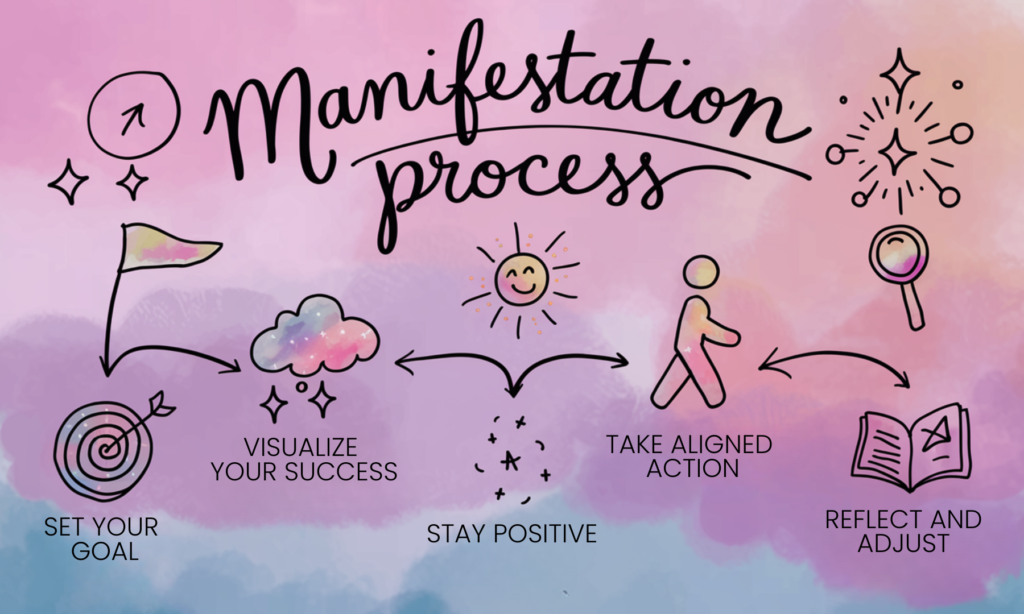
    Manifestation isn’t about wishful thinking. Instead, it’s a process that works best when followed with intention and consistency. Here are the steps to get started:

    1. Set Clear Goals

    First, define exactly what you want. Avoid vague goals like “I want success.” Instead, be specific, such as, “I want to increase my monthly income by 20% within six months.”

    2. Visualize Your Success

    Next, spend a few minutes daily imagining your goal as if it’s already achieved. Engage your senses—see, feel, and believe it’s real.

    3. Affirm and Reframe

    Write down or say affirmations that align with your goals. For example: “I am confident and capable of creating opportunities that lead to success.”

    4. Take Aligned Action

    Then, break your goal into actionable steps. Start small, and take consistent steps to build momentum.

    5. Reflect and Adjust

    Regularly assess your progress. If something isn’t working, adjust your approach instead of giving up entirely.

    6. Practice Gratitude

    Finally, cultivate gratitude by celebrating small wins along the way. This keeps your mindset positive and aligned with your intentions.


    Tools to Support Manifestation

    Manifestation is easier when you have tools to support your focus and consistency:

    • Vision Boards: These provide a visual reminder of your goals, keeping your focus sharp.
    • Journaling: Writing your intentions and tracking your progress helps you reflect and stay motivated.
    • Daily Rituals: Practices like morning affirmations or evening gratitude exercises keep you aligned.

    Real Stories of Manifestation

    Still not convinced? Let’s look at how well-known individuals have successfully applied manifestation in their lives:

    • Oprah Winfrey: She credits her success to intention-setting and visualization, which she calls essential practices in her journey.
    • Jim Carrey: Before his career took off, he wrote himself a $10 million check for “acting services rendered.” A few years later, he earned that exact amount for his role in Dumb and Dumber.
    • Will Smith: He openly talks about the power of belief and focused thought in achieving goals.

    These stories demonstrate how manifestation, when combined with effort and persistence, can lead to incredible results.


    The Science Behind Manifestation

    So, what makes manifestation more than just a feel-good idea? It’s rooted in neuroscience and psychology:

    • Neuroplasticity: This refers to the brain’s ability to rewire itself. Visualization strengthens neural pathways that support your goals, making it easier to act on them.
    • Affirmations: These are supported by Cognitive Behavioral Therapy (CBT), which shows how positive statements can help replace limiting beliefs.

    Dr. Joe Dispenza, a neuroscientist, explains: “When you repeatedly focus on a specific goal, you convince your brain it’s achievable. This belief drives actions aligned with success.”


    Manifestation vs Positive Thinking

    It’s easy to confuse manifestation with positive thinking, but they’re different.

    • Manifestation: A structured process that includes goal-setting, visualization, and aligned action.
    • Positive Thinking: A general mindset that supports optimism and emotional well-being.

    The two work well together—positive thinking creates the foundation, while manifestation provides the tools to take action.


    Common Misconceptions

    Let’s address a few common misconceptions:

    • “Manifestation is Magic”: It’s not. Manifestation requires focus, effort, and perseverance.
    • “Results Should Be Instant”: Achieving your goals takes time and consistent action.
    • “You Don’t Need to Act”: Action is the bridge between your intentions and results.

    How to Get Started

    If you’re ready to give manifestation a try, here’s a simple plan to get started:

    1. Set a Specific Goal: Write it down with as much clarity as possible.
    2. Visualize It Daily: Spend 5 minutes a day imagining your goal as if it’s already achieved.
    3. Create an Action Plan: Break your goal into small, actionable steps.
    4. Track Your Progress: Use a journal to document wins and reflect on areas for improvement.
    5. Stay Consistent: Commit to daily practices like visualization and affirmations.

    Conclusion

    Manifestation isn’t about sitting back and waiting for life to happen. It’s about taking control of your goals, aligning your mindset with your actions, and staying open to opportunities.

    While the process requires patience and consistency, the results can be life-changing. By pairing intention with action, you can turn what once felt out of reach into something achievable.

    Start small, stay consistent, and watch how manifestation transforms the way you pursue your dreams.

  • The Thing That Wasn’t Supposed to Happen, Happened at a Kitchen Table

    I didn’t plan to change someone’s life that day.
    Actually, I wasn’t supposed to be doing anything at all.

    It was a retreat. Not a working one. Just a quiet gathering of women, fellow coaches, soul-driven entrepreneurs. (I had an online stationery business and did some business coaching.) We were there to breathe. No clients. No breakthroughs. Just some space to be.

    Until the kitchen table changed that.

    We were supposed to be relaxing, but someone had shared a new brainstorming tool, and a few of us got curious. We cracked open laptops, sipped coffee, and slipped back into our default mode: creating. One of the women sitting beside me, Lisa, had been fidgeting. Smiling on the outside, but her energy… it was coiled tight. Familiar.

    She didn’t say a word. She didn’t have to.

    I could feel the static of her pain. The way it vibrated just under the skin. The resistance. The grief. The rage. The deep, ancient ache of someone who had lived too many years pretending she was fine.

    I gently put my hand on her arm.

    And that’s when it happened.

    What unfolded in the next hour wasn’t planned, practiced, or professional. There was no process. No fancy method. Just presence. Her story wasn’t new: childhood trauma, abandonment, years of therapy, diagnoses, a nervous breakdown. She had done everything “right.” She had spent $75,000 trying to get better. But still… she carried the weight.

    Not visibly. Not in a way most people would spot. But I did.

    Because I know what it’s like to live with that weight.

    Something cracked open between us. And not in some shiny Instagram ‘healing journey’ kind of way. This was raw. Wordless. Her pain hit me like a freight train, and without thinking, I let it move through me. She cried in ways she hadn’t in decades. We touched places in her soul that therapy hadn’t reached. Not because I tried. But because I knew.

    Not from books.
    Not from certifications.
    But from lived experience. From being a woman who’s carried invisible shit for too long.

    From being a mother who’s screamed into pillows at 3 am because the baby wouldn’t stop crying, and the rage felt unbearable.

    From being the partner of a combat veteran with PTSD who once told me he felt weak for having it, because “other Marines didn’t.”

    From being the kid who didn’t have a horror story on paper, no cult, no dungeon, no homeless shelter, but still felt broken for reasons she couldn’t explain.

    I’ve lived most of my life in the in-between.
    Not the worst-case scenario. Not the best.
    Just… the middle.

    The girl who wasn’t abused by her parents, but also wasn’t really seen. The one who wasn’t rich or poor. Smart but not standout. Quirky, masked, and often misread. I didn’t fit the boxes. I just floated through them.

    So when people tell me they feel like something’s off, like they’ve done all the inner work and still can’t shake the sadness or the self-hate…
    I believe them.

    Because I’ve lived it too.

    And that’s what happened that day in Boston.

    It wasn’t “healing.” It was humaning. Two people at a table, stripping away the story, the shame, the shoulds. No ego. No fixing. Just truth. Lisa later said I “blazed down the walls” she didn’t even know were still there. She said I finally helped her feel what all the other work couldn’t.

    That’s when I realized something:
    This is my work.

    Not the business plans. Not the polished messaging.
    The real stuff. The messy, soul-level, gut-punch truth stuff.

    This wasn’t the first time someone had said something like that to me. I’ve had strangers cry in front of me. I’ve “accidentally” helped people connect with their dead loved ones (which I tried really hard to avoid, by the way). My whole life, I’ve known things I wasn’t supposed to know. Felt things I wasn’t taught to feel.

    But this time?
    Something clicked.

    This wasn’t just a moment.
    It was a mirror.
    It showed me the truth about who I am and why I’m here.

    So no, I’m not your average coach.
    I’m not a healer with a capital H.
    I’m not here to sell you five steps to your best life.

    I’m here to sit beside you at the fucking table and hold your pain like it’s sacred.
    Because it is.

    I’ve built a nonprofit for this.
    I’ve created communities for this.
    I’ve walked through fire, marriage, motherhood, grief, trauma, and burnout so that I could meet people here.

    In the messy middle.
    Not with answers. But with honesty.

    So if you’ve done the work and you’re still stuck…
    If you feel too broken to be fixed, but too aware to pretend anymore…
    If you’re exhausted from being the one who holds it all together…

    I see you.
    Because I am you.

    And you’re not too much.
    You’re just full of truth that’s ready to be heard.

    Let’s sit at the table.
    I’m here.

  • Enhance Your Well-being: How Shamanic Practices Improve Modern Life

    Shamanism, an ancient spiritual practice, offers a transformative path to healing, self-discovery, and spiritual growth.

    By engaging with the wisdom of the spirit world, shamanic techniques help heal past traumas, deepen connections to nature, and provide access to higher guidance. In this article, we’ll explore the many benefits of shamanism and how you can incorporate these powerful practices into your life to cultivate well-being and balance.

    What is Shamanism?

    The concept of the “shadow” in psychology

    Shamanism is an ancient practice rooted in the belief that everything in the universe is interconnected. Shamans serve as bridges between the physical and spiritual realms, using practices like drumming, chanting, and journeying to communicate with spirits, ancestors, and non-physical beings. By altering their consciousness, shamans access higher wisdom and healing energies for themselves and their communities.

    The Role of the Shaman

    Shamans play an essential role as healers, guides, and spiritual leaders. They enter altered states to gain insight from the spirit world, address energetic imbalances, and offer guidance. Shamans facilitate healing by removing spiritual blockages, restoring balance, and bringing clarity to those seeking transformation.

    Think of shamans as spiritual translators. They access realms beyond the physical, bringing wisdom that’s often inaccessible in everyday life. Whether it’s facilitating healing rituals, conducting ceremonies for life events, or offering spiritual insight, shamans create a link between the human experience and the unseen forces that shape our lives.

    What is Shamanism?

    Shamanic practices vary across cultures, but some foundational techniques are common worldwide. These include:

    Drumming and Chanting

    Rhythmic drumming and chanting induce a trance-like state, allowing the shaman to access altered realities. The repetitive beat synchronizes with the heartbeat, leading to a deep meditative state where connection with the spirit world can take place.

    Example: Next time you meditate, try playing a rhythmic drumbeat or chant softly to focus your mind and deepen your meditation.

    Shamanic Journeying

    Journeying is the process of traveling to non-ordinary realities, where shamans connect with spirit guides, power animals, or ancestors. These journeys are often driven by specific intentions, such as healing, finding clarity, or seeking guidance.

    Healing Ceremonies and Rituals

    Shamans conduct ceremonies using sacred tools like plants, altars, or medicine wheels. These rituals cleanse negative energies, promote balance, and restore well-being.

    Global Shamanic Traditions

    Shamanism is practiced across cultures, each with unique expressions of this ancient wisdom. A few prominent traditions include:

    Siberian Shamanism

    In Siberia, shamans often work with animal spirits to guide healing and protection. They wear ceremonial garments adorned with animal furs and feathers, believed to help them connect more deeply with the spirit world.

    Native American Shamanism

    This tradition emphasizes the sacredness of nature, ancestors, and the elements. Ceremonies involve sacred plants like tobacco and sage, and tools like the medicine wheel to promote healing and spiritual insight.

    Amazonian Shamanism

    In the Amazon, shamans use sacred plants such as ayahuasca to enter altered states of consciousness. These rituals offer deep spiritual insight and healing by connecting with the spirits of the plants and the natural world.

    The Healing Power of Shamanic Techniques

    Shamanic healing focuses on the spiritual causes of illness, seeking to restore harmony between the individual and the spiritual realm. By clearing energetic blockages, releasing traumas, and retrieving lost soul fragments, shamanic practices foster deep, holistic healing.

    Clearing Negative Energies

    We accumulate energetic imprints from past experiences that linger in our energy field, often manifesting as fear, phobias, or limiting beliefs. Shamanic healing helps release these energetic imprints, freeing us to live with greater clarity and purpose.

    Soul Retrieval

    In shamanic tradition, trauma or significant life events can cause soul loss, where parts of our essence become fragmented. Soul retrieval is a powerful technique where lost parts of the soul are recovered, restoring wholeness, vitality, and purpose.

    Exercise: Reflect on a time in your life where you felt disconnected or emotionally drained. Journal about this experience, imagining what part of your essence was lost. Set an intention to retrieve this lost aspect of yourself through meditation, visualization, or guided journeying.

    Connecting with Spirit Guides

    In shamanic traditions, spirit guides offer wisdom and protection. These guides can take many forms—ancestors, animals, or even elements in nature. By forming relationships with these guides, we gain insight and clarity on our life’s path.

    Example: Next time you meditate or journal, ask your spirit guide for guidance. Write down any messages or feelings that come to you, even if they seem subtle.

    Healing the Ancestral Line

    Many shamanic traditions believe that unresolved traumas from our ancestors affect our lives. By healing ancestral wounds, we can break generational patterns, freeing ourselves from their burden.

    Exercise: Create a ritual to honor your ancestors. Light a candle, offer gratitude, and ask for their wisdom and guidance. This simple act can begin to open the flow of healing and transformation in your ancestral line.

    Emotional Healing Techniques

    Shamanism empowers you to take control of your healing journey. Through the practices of soul retrieval, energy clearing, and working with spirit guides, you can reclaim your wholeness and develop self-healing abilities.

    The Path of the Wounded Healer

    In many shamanic traditions, those who experience deep wounds or trauma often emerge as powerful healers. By walking this path, they understand both suffering and healing and can help others navigate their journeys.

    Shamanic Journeying for Personal Growth

    Through shamanic journeying, you can access higher guidance, personal solutions, and insights that go beyond the physical world. This practice allows for profound personal growth by connecting you to universal wisdom and the deeper truths within yourself.

    Uncover Solutions to Challenges

    When faced with difficult situations, shamanic journeying helps uncover solutions by connecting you with your spiritual allies. Whether navigating life changes, emotional blockages, or recurring patterns, the spirit world offers clarity and direction.

    Example: If you are facing a personal challenge, take some time to meditate or journey with the intention of finding guidance. Ask your spirit guides for insight and remain open to the answers, which might come through dreams, thoughts, or synchronicities.

    Harnessing Nature’s Wisdom for Healing

    Shamanism teaches a deep respect for nature, recognizing the wisdom within animals, plants, and the elements. By aligning with nature, you can access powerful sources of healing and transformation.

    Animal Medicine

    In shamanism, animals are revered as sacred beings that carry unique teachings and guidance. By discovering your power animal, you gain access to its medicine—whether strength, wisdom, or protection.

    Exercise: During meditation, ask to meet your power animal. Notice any animals that appear in your dreams, journeys, or even real life, and explore the qualities they may represent for you.

    Elemental Healing Practices

    Each element—earth, water, fire, and air—offers distinct healing energies. By connecting with these elements, you bring balance and vitality to your life. Engage in elemental rituals, such as walking barefoot on the earth for grounding, bathing in water for cleansing, or lighting a candle for transformation.

    How to Begin Your Shamanic Practice

    Starting your shamanic journey involves education, practice, and connecting with nature and spirit guides. Educate yourself through respected books and workshops, and cultivate a daily practice that integrates journaling, meditation, and time in nature.

    Develop a Daily Practice

    A consistent daily practice is key to integrating shamanic wisdom into your life. Start by journaling your insights, spending time in nature, and practicing simple rituals like offering gratitude to the elements or setting intentions for your day.

    Embrace the Wisdom of Shamanism

    Shamanism offers profound tools for healing, transformation, and spiritual connection. By engaging with these ancient practices, you can release energetic imprints, retrieve lost soul fragments, and align with your highest path. Whether you seek healing, clarity, or spiritual growth, shamanic practices can guide you toward a deeper connection with yourself, the spirit world, and the natural world.

    Begin exploring these practices today and uncover the wisdom and transformation that shamanism holds for your life.


  • Discover the Magic of Plant Medicine: A Comprehensive Introduction to Holistic Healing

    Psychedelic plant medicines—like psilocybin, ayahuasca, and ibogaine—are revolutionizing how we approach healing, offering therapeutic breakthroughs in mental health care. From alleviating depression and anxiety to catalyzing deep emotional healing and personal growth, these substances are becoming essential tools in holistic well-being.

    But how can you fully unlock the transformative power of these ancient medicines?

    Here, we’ll dive into five essential strategies, backed by research, to ensure you’re maximizing your psychedelic journey:

    1. Understand the unique effects and uses of different psychedelics.
    2. Prepare for and integrate your experiences to foster lasting transformation.
    3. Explore microdosing protocols for improved mental clarity and creativity.
    4. Choose safe, reputable retreats and experienced facilitators.
    5. Practice mindfulness, creative expression, and embodiment to sustain long-term benefits.

    Whether you’re curious about psychedelic-assisted therapy, considering a retreat, or just beginning your exploration, this guide equips you with the tools and insight needed to navigate this world confidently and intentionally.


    Maximizing the Benefits of Psychedelic-Assisted Therapy

    To make the most of psychedelic therapy, understanding each substance’s unique properties and knowing how to prepare and integrate your experience is key to unlocking its full potential.

    Understanding Different Psychedelics in Therapy

    Each psychedelic offers a distinct healing approach. For example:

    • Psilocybin (magic mushrooms) is particularly effective for alleviating depression and anxiety, especially in terminally ill patients. A 2016 study found that a single dose reduced anxiety and depression in cancer patients, with effects lasting up to six months.
    • LSD has been used successfully to treat alcohol dependence and anxiety. In a 2014 study, patients with life-threatening illnesses experienced significant reductions in anxiety after a single dose.
    • MDMA (commonly known as ecstasy) shines in treating PTSD. Its unique ability to enhance empathy and reduce fear makes it a powerful tool in trauma therapy. A 2019 study revealed that after just two MDMA-assisted sessions, over 50% of participants no longer met the criteria for PTSD.
    • Ketamine offers a rapid response for treatment-resistant depression. Unlike traditional antidepressants, it can provide relief in hours, with studies showing that intravenous ketamine can significantly reduce suicidal ideation for up to seven days.

    Preparing for a Psychedelic Therapy Session

    Preparation is essential for a positive therapeutic experience. The principles of “set and setting”—your mindset and environment—are critical. Cultivate openness, trust, and a readiness to embrace whatever arises. The environment should be calm, comfortable, and free from distractions. Natural elements, such as soft lighting or plants, can create a grounding atmosphere.

    Exercise: Journaling before your session can help clarify your intentions. What do you hope to release, discover, or integrate? Writing these thoughts can help guide your journey.

    Integration: Turning Insights Into Lasting Change

    Your therapist plays a vital role not just during the session but in post-session integration. Following your journey, processing insights and emotions can turn the experience into meaningful, long-term change.

    Exploring Microdosing: A Gentle Introduction to Psychedelics

    Microdosing—taking sub-perceptual doses of psychedelics—has been lauded for improving mood, creativity, and focus. Unlike full-dose experiences, microdosing offers a subtle but sustained shift in consciousness that can enhance daily life.

    Creating a Personalized Microdosing Protocol

    A thoughtful, individualized approach to microdosing is essential. Below are a few popular protocols:

    ScheduleDescription
    Fadiman ProtocolOne microdose every three days
    Workweek ProtocolMicrodosing Monday to Friday with breaks on weekends
    Intuitive ProtocolMicrodosing based on personal intuition and reflection

    Exercise: Keep a journal to track your experience. Noting shifts in mood, focus, and creativity can help you adjust your dosing for optimal results.


    The Transformative Power of Ayahuasca Ceremonies

    Ayahuasca, a psychoactive brew from the Amazon, offers powerful spiritual and therapeutic experiences. Research suggests it can treat depression, anxiety, and addiction, but preparation and integration are crucial.

    Preparing for an Ayahuasca Ceremony

    Before embarking on an ayahuasca journey, physical and mental preparation is essential. This may involve a specific diet, meditation, or fasting to purify the body. Additionally, setting clear intentions will guide your experience.

    Post-ceremony, working with an integration coach can help solidify the insights gained. Integration is where the real work begins—applying lessons learned during the ceremony to everyday life.

    Exercise: As you prepare for an ayahuasca experience, consider meditating on this question: “What part of myself do I need to meet with love during this journey?”

    “Within every leaf, root, and stem lies a story of healing, waiting to be discovered. Embrace the whispers of nature, for they hold the secrets to our deepest wellness.”

    Psilocybin Mushrooms: A Path to Self-Discovery

    Psilocybin mushrooms have been at the forefront of clinical research for their ability to alleviate depression, anxiety, and addiction. Properly navigating the set and setting of a psilocybin experience is key to maximizing its therapeutic potential.

    Choosing a Safe Psilocybin Retreat

    Not all retreats are created equal. Look for those that offer expert facilitators, a solid screening process, and comprehensive integration support. These factors ensure you have a safe, beneficial experience.

    Integrating Psychedelic Experiences for Lasting Change

    While the psychedelic journey itself can be profound, integration—the process of weaving your insights into your daily life—is where true transformation occurs. The following practices can help you integrate these experiences:

    Journaling for Self-Reflection

    Journaling allows you to make sense of the insights you gain during a psychedelic journey. Specific prompts can guide your self-inquiry, helping you track growth over time.

    Example Prompts:

    • What did I learn about myself during my experience?
    • How do I want to apply these insights moving forward?
    • What am I being called to release or embrace?

    Recommended Resources:

    • The Artist’s Way by Julia Cameron
    • Writing Down the Bones by Natalie Goldberg

    Mindfulness and Meditation

    Practicing mindfulness helps you stay grounded after your experience. Regular meditation can deepen your self-awareness and emotional resilience, supporting ongoing growth.

    Recommended Resources:

    • Wherever You Go, There You Are by Jon Kabat-Zinn
    • Apps like Headspace or Insight Timer

    Engaging in Creative Expression and Embodiment

    Engaging in creative practices like art, music, or movement can help process stored emotions and integrate the mind, body, and spirit.

    Recommended Resources:

    • The Body Keeps the Score by Bessel van der Kolk
    • Waking the Tiger by Peter Levine

    The Future of Psychedelic Plant Medicine

    As research expands, so does our understanding of other plant medicines like ibogaine, salvia divinorum, and mescaline. Each plant holds unique healing potential, offering new pathways for growth and transformation.

    Advocating for Responsible Use

    The future of psychedelic medicine depends on responsible use, ongoing research, and education. Supporting efforts toward decriminalization and legalization ensures these powerful tools remain accessible to those who need them while minimizing risks.

    Psychedelic Plant Medicines as a Path to Growth

    Psychedelic plant medicines offer a profound approach to mental health and personal transformation. Whether through therapy, microdosing, or ceremonial journeys, these tools provide opportunities for deep emotional healing, creative expression, and lasting change.

    Are you ready to explore the transformative potential of plant medicines? Begin by educating yourself, connecting with experienced facilitators, and embracing the process with openness, curiosity, and self-compassion.